The Trang Islands: Koh Mook, Koh Kradan and Koh Ngai at Their Own Pace
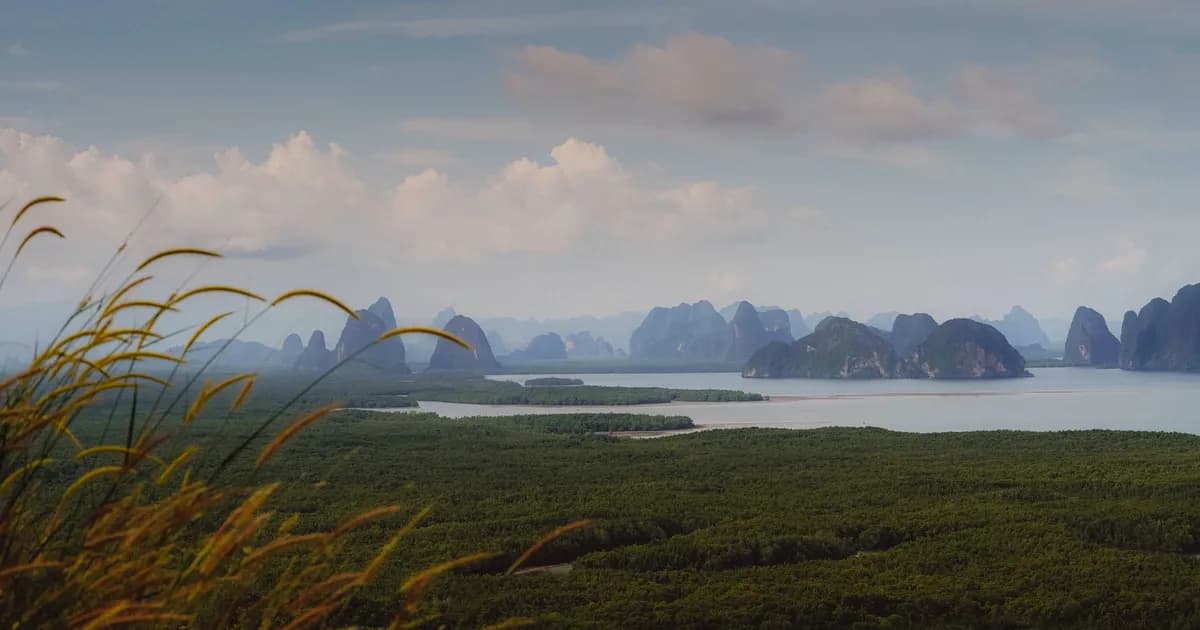
Most travellers rush past Trang on the way to somewhere louder. That is exactly why the islands off its coast still feel like the Andaman of twenty years ago: limestone rising straight out of clear water, beaches without a single jet ski, and mornings so quiet you can hear the reef. Koh Ngai, Koh Mook and Koh Kradan are not undiscovered, but they are unhurried, and for a slow traveller that difference is everything.
This is a corner of southern Thailand that rewards staying put. There is no nightlife to speak of, no ring road, and on two of the three islands no cars at all. What you get instead is time, and the rare chance to watch a place wake up and wind down without a schedule imposed on it.
Where the Trang Islands sit, and why they stay quiet
The Trang archipelago strings out along the Andaman coast south of Krabi and north of the Malaysian border. Administratively they belong to Trang province, a workaday region better known for its rubber plantations and its famous roast pork than for tourism. That ordinariness is the islands' quiet protector: there is no airport on Trang's coast pulling in package charters, and the mainland town of Trang is a genuine Thai provincial capital rather than a resort strip.
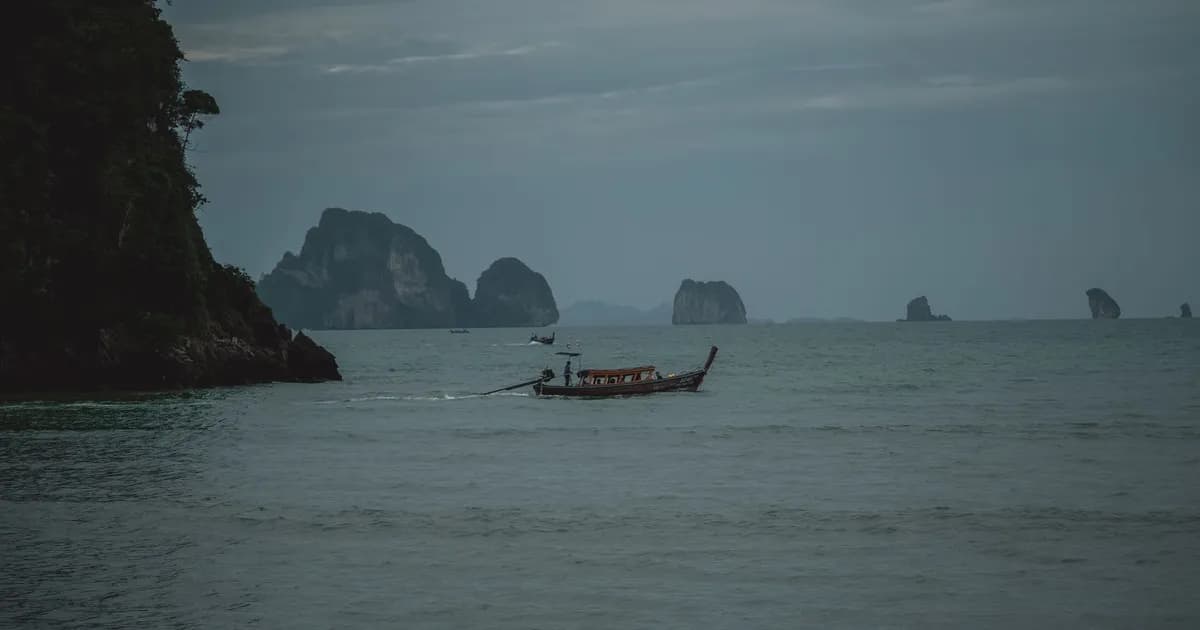
The result is an island group that never industrialised its tourism. Room supply is deliberately limited, longtail boats still outnumber speedboats in many bays, and the rhythm is set by tides and ferries rather than by nightlife. If you have spent time on Phi Phi or the busier stretches of Phuket and wondered where the older, slower Thailand went, a good part of the answer is here. For a wider view of where the country's crowds have and have not reached, our guide to Thailand off the beaten path puts Trang in context.
One request. Up to five tailored proposals.
Skip contacting agencies one by one — share your trip once and let up to five trusted Thailand agencies come to you. Free, with no obligation.
Get my free quotesKoh Ngai: barefoot mornings on the reef
Koh Ngai (sometimes written Koh Hai) is the classic Trang first stop, and the one that most looks the part: a long east-facing beach of pale sand, shallow turquoise water, and a fringing reef you can reach by wading out at high tide. There are no roads and no village to speak of, just a handful of resorts strung along the shore, from simple bungalows to a few comfortable mid-range places.
Because the reef sits so close in, Koh Ngai is one of the best islands in the group for casual snorkelling straight off the beach. Mornings are the magic hour: the day-trip boats from the mainland have not yet arrived, the water is glassy, and the light is soft. By mid-afternoon a few tour boats pull in, and by sunset they are gone again and the island is yours.
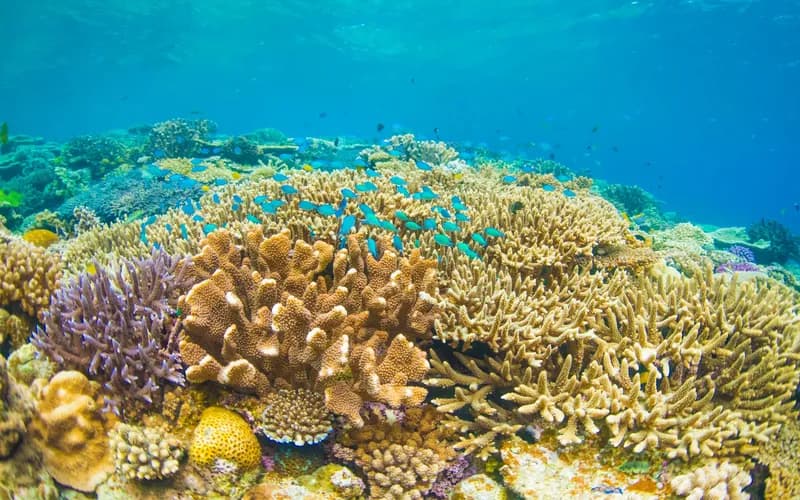
Koh Ngai works well as a base for the "four islands" longtail loop that takes in the Emerald Cave and the shallow reefs between the islands. Hiring a longtail for a half day, rather than joining a big speedboat tour, keeps the experience slow and lets you time your stops around the crowds.
Koh Mook and the Emerald Cave
Koh Mook (Koh Muk) is the most lived-in of the three, and the more interesting for it. A working Muslim fishing village occupies the eastern side of the island, its lanes busy with motorbikes, tea shops and the call to prayer, while the western shore holds Farang Beach and a scatter of low-key resorts. Staying here means brushing up against ordinary island life in a way the resort-only islands do not offer.
The island's signature is Tham Morakot, the Emerald Cave. At the right tide you swim through an eighty-metre sea tunnel, part of it in total darkness, and emerge into a hidden lagoon ringed by sheer cliffs with a small beach at the centre. Go early with a longtail boatman before the day boats arrive and you may have the lagoon almost to yourself; go at midday in high season and you will be swimming in a queue. The difference is entirely a matter of timing, which is the slow traveller's quiet advantage.
Get matched with up to 5 trusted Thailand agencies
- Free
- No obligation
- Up to 5 agencies
Koh Kradan: a beach and not much else, on purpose
Koh Kradan is the picture-postcard of the group and, by design, the least developed for its beauty. There is no village, no road and no real budget accommodation; a small number of eco-minded and mid-range properties share a long west-facing beach that catches the sunset. What Kradan offers is deliberately simple: swimming, snorkelling over the offshore reef, reading, and watching the light change over the water.
That simplicity is the point. Kradan is not the island for travellers who need things to do; it is the island for travellers who have finally stopped needing things to do. If you are building an itinerary that balances active days with genuine rest, it pairs well with the mainland's slower corners and with the national parks inland; our overview of how to choose your Thai island by coast and season can help you decide whether Kradan belongs at the start or the end of your trip.
Getting there slowly: piers, ferries and longtails
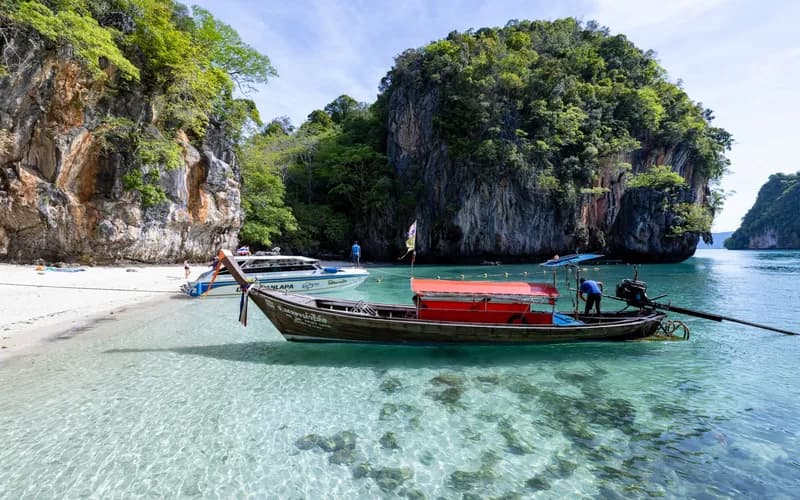
Reaching the Trang islands is part of the experience, and it is refreshingly analogue. The mainland jump-off points are Pak Meng Pier and Hat Yao Pier, both a short drive from Trang town, which is itself reachable by overnight train from Bangkok or by a short flight to Trang Airport. During the November-to-April high season, scheduled ferries and longtails run to all three islands, typically costing a few hundred baht per person each way; between islands, longtail boats shuttle across in a matter of minutes.
There is no need for a speedboat transfer, and much to be said for refusing one. The slow ferries and longtails move at the pace of the sea, and they connect the islands to one another so you can hop from Koh Ngai to Koh Mook to Koh Kradan without backtracking to the mainland. If you are piecing together the wider journey south, our guide to getting around Thailand slowly covers the train, bus and boat connections that get you here without flying.
When to go, and when the islands rest
The Trang islands run on a clear seasonal clock. The dry, calm months from November to April are high season, with settled seas, reliable ferries and the fullest choice of rooms; December to February is the busiest window, and on Kradan in particular the limited accommodation books out well ahead. This is the time for dependable snorkelling and glassy mornings.
The green season, roughly May to October, is a different proposition. The Andaman monsoon brings bigger swells and rougher crossings, some resorts close, and ferry schedules thin out. It is not off-limits, but it asks for flexibility and a tolerance for weather. Travellers who lean into it are rewarded with lower prices, empty beaches and a landscape at its most vivid; our guide to travelling Thailand in the green season is worth reading before you commit to a rainy-season crossing. Whenever you come, the islands reward the traveller who arrives with time to spare and no fixed plan for the next morning.
Eating and staying like a local
The Trang islands are small, but the mainland behind them is one of southern Thailand's most rewarding food regions, and it is worth building a night in Trang town around it. Trang is famous across Thailand for its moo yang, the crisp-skinned roast pork eaten at breakfast with strong local coffee, and for its dim sum culture, a legacy of the province's Hokkien Chinese community. Arriving a day early to eat your way through a Trang morning market is one of the quiet pleasures of coming this way, and it sets the tone for the slower days on the islands.
On the islands themselves, meals are simpler. Most resorts serve fresh seafood and Thai standards, often as a single evening sitting under the stars rather than a choice of restaurants. Dishes arrive when the kitchen is ready, not the moment you order, and that unhurried rhythm is part of the point. Bring patience, an appetite, and a torch for the walk back to your bungalow along an unlit beach. If you want to understand what southern Thai kitchens do differently before you come, our guide to Thai food in 2026 is a good place to start.
What to Do Next
- Decide your base. Choose Koh Ngai for reef-off-the-beach ease, Koh Mook for village life and the Emerald Cave, or Koh Kradan for pure quiet. Many travellers split their stay across two.
- Book accommodation early for December to February, especially on Kradan, where rooms are few and fill months ahead.
- Plan your arrival around the mainland piers at Pak Meng or Hat Yao, and reach Trang town by overnight train or a short domestic flight.
- Favour scheduled ferries and hired longtails over speedboat day tours, and time the Emerald Cave for early morning.
- If you want the islands linked into a longer, low-carbon southern journey, talk to a specialist through our Thailand travel agencies page.
Frequently Asked Questions
Which Trang island is best for a first visit?
Koh Ngai is the easiest introduction: a long swimmable beach, a reef you can reach from shore, and a range of accommodation. Koh Mook suits travellers who want a working village alongside the beaches, while Koh Kradan is best for those whose main plan is to do very little.
Do I need to book island-hopping tours in advance?
Not usually. In high season you can arrange longtail transfers and the four-islands loop locally, often through your resort, which keeps things flexible. Hiring your own longtail for a half day gives you the freedom to reach the Emerald Cave before the day boats arrive.
Are there ATMs and reliable Wi-Fi on the islands?
Facilities are limited, especially on Koh Kradan and Koh Ngai. Bring enough cash from Trang town, and expect Wi-Fi and mobile signal to be patchy and slow. This is part of what keeps the islands quiet; plan to be largely offline.
Can I visit the Trang islands in the rainy season?
You can, from roughly May to October, but seas are rougher, some resorts close and ferries run less often. Prices are lower and beaches emptier, so it can suit flexible travellers, but build in slack for weather-related changes.
How do I get to Trang without flying?
Trang town is on the southern rail line, with overnight sleeper trains from Bangkok, from where it is a short transfer to Pak Meng or Hat Yao piers. This makes the islands one of the more satisfying places in the south to reach entirely overland.
Are the Trang islands good for families?
Yes, particularly Koh Ngai, whose calm shallow beach suits children, and whose resorts cater to families. Koh Mook offers more to see, while Koh Kradan is quieter and better for older children and adults seeking rest.