
Every year Vietnam hands one province the National Tourism Year, a rolling programme of festivals, promotion and investment attention. The choice is usually a reliable signal of where the country wants visitors to go next, which is not always where they are currently going. For 2026 the host is Gia Lai, and the choice says more about Vietnamese tourism policy than any strategy document published this decade.
What was actually announced
The National Tourism Year 2026 opened in Quy Nhon ward, Gia Lai province, on 28 March 2026, under the theme "The vast forests touch the blue sea." The closing ceremony is scheduled for Pleiku ward at the end of December.
The programme is unusually large. Roughly 244 tourism, cultural and sports events and activities are planned across the year: 18 chaired by the Ministry of Culture, Sports and Tourism, 109 chaired by Gia Lai province itself, and 117 supporting activities run by 22 other provinces and centrally governed cities. Activities are organised around quarterly themes and span festivals, sport, promotion, trade networking, investment forums, community programmes and experience-led events.
That last number is the interesting one. More than a hundred supporting events hosted by other provinces means this was designed as a national linkage exercise rather than a single province's showcase. Gia Lai is the stage; the argument is about regional connection.
One request. Up to five tailored proposals.
Skip contacting agencies one by one — share your trip once and let up to five trusted Vietnam agencies come to you. Free, with no obligation.
Get my free quotesWhy Gia Lai, and why now
Until mid-2025, Gia Lai was a landlocked Central Highlands province best known domestically for coffee, pepper, rubber and the volcanic lake at Bien Ho. It had no coastline, limited tourism infrastructure and a modest visitor economy.
Then the national administrative reorganisation merged Gia Lai with Binh Dinh. The combined province is now the second largest in Vietnam by area, and it reaches from highland plateau to the central coast, including Quy Nhon. Gia Lai proactively registered to host National Tourism Year 2026 against other candidate localities, and won.
The sequence matters. A province that could not credibly have bid two years earlier bid immediately after gaining a coast, and the national government said yes. If you want to understand what the redrawn map is for in tourism terms, this is the clearest available answer, and we cover the mechanics separately in our explainer on Vietnam's new provincial map and what it changes for travelers.
The forest-to-sea theme is a merger story
"The vast forests touch the blue sea" is not poetry for its own sake. It is a description of an administrative fact turned into a product.
The old model sold Vietnam in slices: a beach province, a mountain province, a heritage town. Provincial tourism departments competed with their immediate neighbours for the same arrivals, and routes stopped at boundaries because budgets did. A merged province containing both highland and coast has an internal incentive to sell them together, and no incentive at all to stop a visitor at a line that no longer exists.
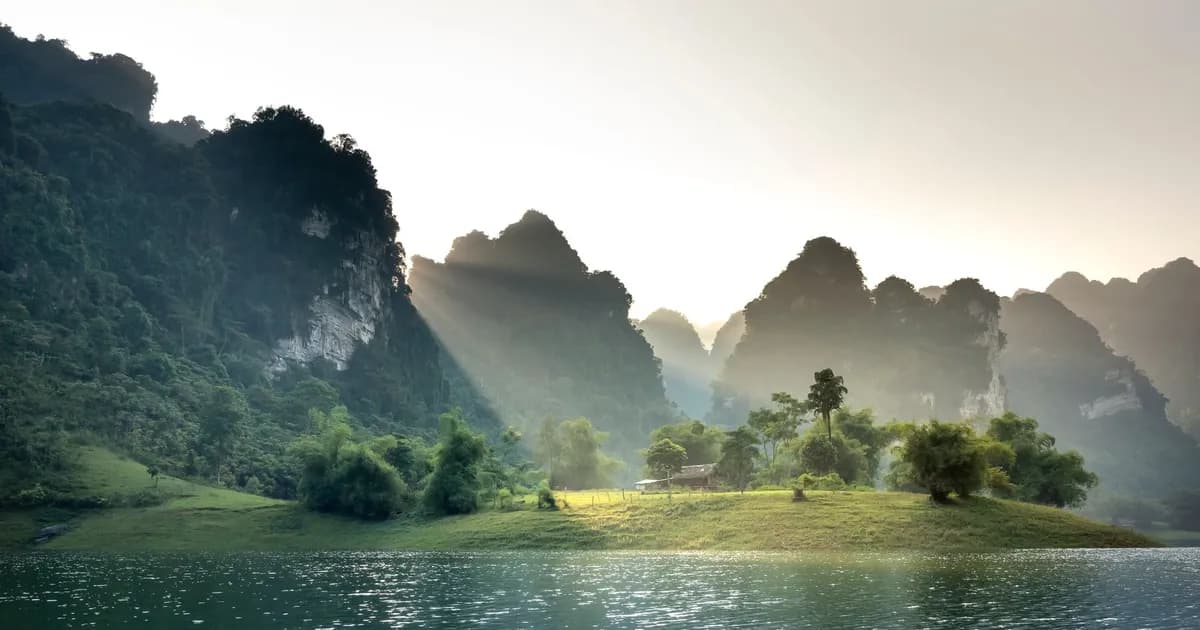
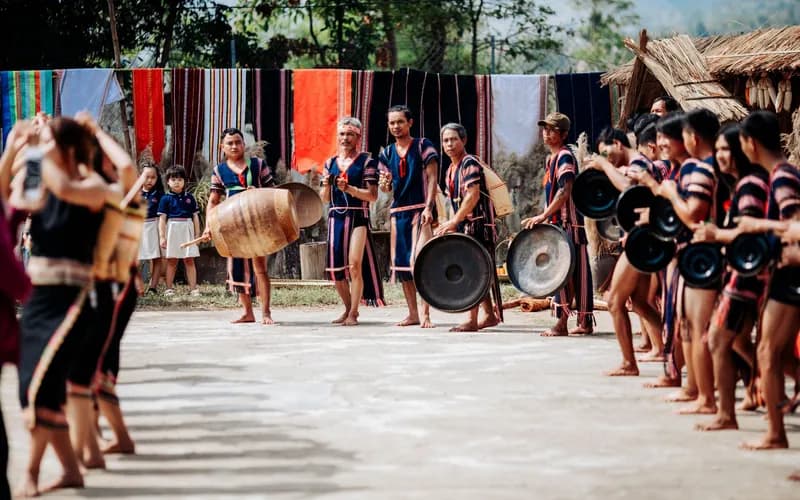
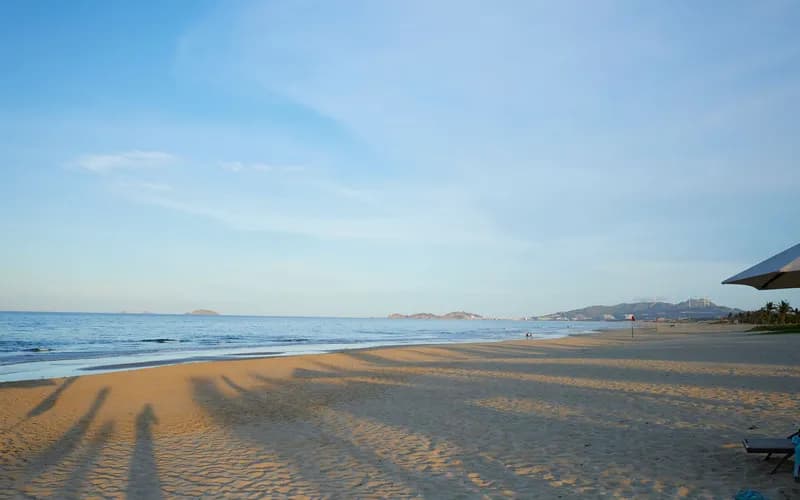
What that produces on the ground is itineraries with vertical range: gong culture and ethnic minority villages on the plateau, waterfalls and crater lakes in between, then the quiet central coastline and Cham towers near the sea. For anyone who has watched Vietnamese tourism default to Hanoi, Ha Long, Hoi An and Ho Chi Minh City for two decades, this is a genuinely different shape of trip. If you want a sense of the coastal end of it, our guide to the quiet coast around Quy Nhon describes what is already there.
Get matched with up to 5 trusted Vietnam agencies
- Free
- No obligation
- Up to 5 agencies
The inland pivot behind the announcement
Gia Lai is not an isolated decision. It sits inside a broader and fairly explicit effort to redirect demand away from a handful of saturated destinations and toward mountain, highland and agricultural regions.
The supporting evidence is consistent across 2026 messaging:
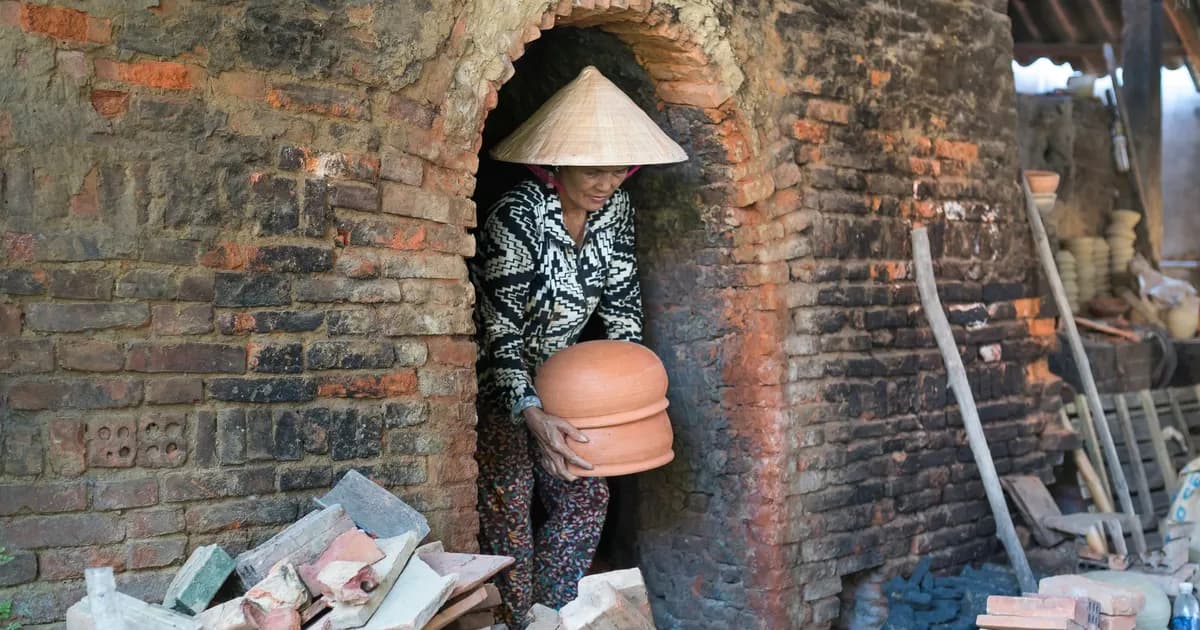
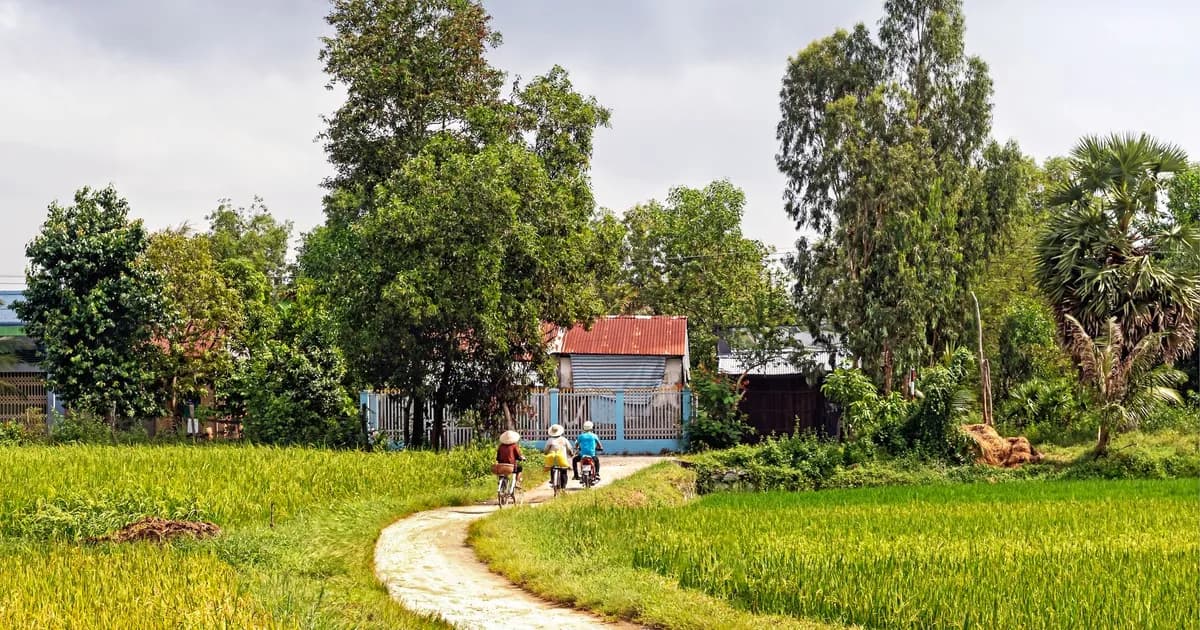
- National tourism communications have foregrounded homestays in ethnic minority villages, agritourism in the Mekong and Red River deltas, and revitalised craft villages.
- Rural and community tourism is being framed as income diversification for areas historically dependent on agriculture and forestry, spanning accommodation, food service, guiding, handicrafts and transport.
- Premium operators report growing demand for private highland routes and upscale homestays built around respectful access to H'mong and Dao communities, particularly among Western, Australian and Northern European travelers.
- Provincial reorganisation has given inland provinces both larger budgets and, in several cases, a coastline to bundle with.
Read together, this is a supply-side answer to a demand-side problem. Vietnam's headline destinations are under pressure, and the strategy is less about capping visitors there than about building somewhere else credible for them to go, a dynamic we have tracked in our analysis of how overtourism is redrawing Vietnam's travel map.
What this actually means if you are planning a trip
Three practical consequences, in descending order of confidence.
First, access to Gia Lai improves during a tourism year and usually does not fully retreat afterwards. Expect better signage, more English-language material, more licensed guides and more scheduled transport in 2026 than in 2025. Host provinces receive infrastructure attention that outlasts the calendar.
Second, timing becomes a real variable. A 244-event programme means large domestic crowds on specific dates and a very quiet province between them. The opening in late March and the closing in December are the two peaks. For most of the year, a highland province with a new coastline remains one of the least crowded parts of Vietnam, which is precisely the window worth taking.
Third, prices in Quy Nhon and along the Binh Dinh coast will move before prices inland do. Coastal recognition monetises faster than highland recognition. If you want the region before it repositions, the plateau side, and the neighbouring coffee highlands of Dak Lak, are the better value and the better story.
The honest caveats
We would be doing our readers a disservice by presenting this as unambiguously good.
Tourism years are promotional instruments. They generate announcements reliably and delivery unevenly, and the 244-event figure is a plan rather than a record of what happened. Some of those events will be genuine cultural programming; some will be trade fairs and ribbon-cuttings with a tourism label attached.
More seriously, the model being promoted, community-based tourism in ethnic minority villages, has a well-documented failure mode. When demand arrives faster than community capacity, the result is externally owned homestays using minority aesthetics, performances scheduled for buses, and a village where the income accrues to whoever arrived with capital. Sa Pa is the cautionary example every Vietnamese tourism planner knows and not every one of them heeds.
The distinction that matters is ownership, not decor. A stilt house built last year by an outside investor and a family home that has hosted guests for a decade look increasingly similar and function completely differently. Asking who owns the property and where the fee goes is the single most useful question a visitor can ask in these regions, and it is a habit we set out in our slow travel charter.
Finally, infrastructure lags intent. Gia Lai's internal distances are considerable, the highland-to-coast drive is not a short hop, and the province's own promotional materials are more optimistic about connectivity than a map is. Plan on Vietnamese highland travel times, not brochure times.
Where this fits in the longer trend
Step back and Gia Lai 2026 is one data point in a fairly coherent multi-year direction: inland, longer, more experience-led, less transactional. Vietnamese tourism spent the 2010s building volume and is spending the 2020s trying to redistribute and deepen it. The results are visible in the growth of craft, food and cultural immersion products that we examined in our piece on experience-first travel in Vietnam.
Whether the policy succeeds depends on something the announcements do not control: whether visitors actually go. A tourism year can build a road and print a brochure. It cannot make anyone spend four days on a plateau instead of two on a beach. That part is a reader's decision, and it happens to be the decision this entire brand exists to argue for.
What to Do Next
- If you want Gia Lai without the programme, travel outside late March and December, when the opening and closing ceremonies concentrate domestic crowds.
- Check the province's event calendar before fixing dates, either to catch a specific festival or deliberately to avoid one.
- Plan highland-to-coast as two bases with a real transfer day between them, not as a day trip.
- Book the coastal leg earlier than the inland leg. Quy Nhon accommodation will tighten first.
- Ask any homestay or community tourism operator directly who owns the property and how the fee is split. The answer is diagnostic.
- Pair Gia Lai with a neighbouring highland province rather than with a famous coastal one, which is where the interesting version of this trip lives.
- Give the region at least five days. A tourism year rewards the traveler who stays, not the one who ticks the opening ceremony.
Frequently Asked Questions
What is Vietnam's National Tourism Year?
An annual programme in which one province is designated national host, receiving concentrated promotion, investment attention and a calendar of events, usually running from a spring opening to a December closing. It functions as both a marketing campaign and a signal of national tourism priorities.
Why was Gia Lai chosen for 2026?
Gia Lai proactively bid after merging with Binh Dinh in the 2025 administrative reorganisation, which gave the province both a coastline and far greater scale. The combination of highland and coast fits the national strategy of redirecting visitors inland, and the province is now the second largest in Vietnam by area.
Does the tourism year mean Gia Lai will be crowded?
On specific dates, yes, mainly around the opening in late March and the closing in December, and mostly with domestic visitors. Between events the province remains one of Vietnam's quieter regions.
Is Quy Nhon part of Gia Lai now?
Yes. Following the merger of Gia Lai and Binh Dinh, Quy Nhon sits within Gia Lai province. Listings and maps have updated at different speeds, so you may still see it under the old province name.
Should I change my Vietnam itinerary because of this?
Not for the tourism year itself. The reason to consider Gia Lai is the underlying one: it is an under-visited region with genuine highland culture and an uncrowded coast. The programme is a reason to expect better access, not a reason to rearrange a trip around ceremonies.
Is community-based tourism in the highlands actually beneficial to locals?
It can be, and often is, but ownership determines the answer more than appearance. Family-run homestays with a long history and community-organised activities distribute income locally. Externally financed properties using minority aesthetics frequently do not. Ask directly.
What is the best time of year to visit the Central Highlands?
Broadly December to April for dry, cool, clear conditions, with coffee blossom in late February and March. The wet season from May to November brings heavy afternoon rain, full waterfalls and harvest activity, and far fewer visitors.