

Most people book a trek in northern Vietnam by choosing a place name and hoping. They pick Sapa because they have heard of it, or Ha Giang because a video looked good, and only discover on day two that the walking is easier than they wanted, or much harder, or that the season has turned the trail into a mudslide. The regions are not interchangeable. Nor are the operators, the grades, the months or the sleeping arrangements. This is a guide to making that choice deliberately, so that the days on the trail are the ones you actually came for.
Start with what you actually want from the walking
Before comparing regions, answer three questions honestly.
First: is the walking the point, or the transport? Some travellers want a physical challenge with elevation and distance. Others want a way of moving between villages at three kilometres an hour so that the landscape and the households along the way become visible. Both are valid; they lead to different itineraries and different regions.
Second: how many consecutive days can you walk? A single day out and back is a different product from three days point-to-point with a bag carried forward. Most people overestimate. If you have not walked six hours on consecutive days in the last year, plan for two days and add a third if it goes well.
Third: how much discomfort are you willing to accept in exchange for solitude? In northern Vietnam, quiet correlates almost perfectly with poor roads, cold nights, shared sleeping platforms and no reliable data signal. That trade is the whole choice.
One request. Up to five tailored proposals.
Skip contacting agencies one by one — share your trip once and let up to five trusted Vietnam agencies come to you. Free, with no obligation.
Get my free quotesThe four regions, honestly compared
Sapa and the Muong Hoa valley remain the most accessible serious trekking in the north. The terrain is terraced hillside with steady climbs rather than alpine gradients, villages sit an easy walking distance apart, and the infrastructure is mature. The downside is well documented: the town itself has been overbuilt, and the trails nearest it can feel processed. The answer is to walk further out and stay lower down, which we cover in our look at the quieter side of the Sapa valleys.
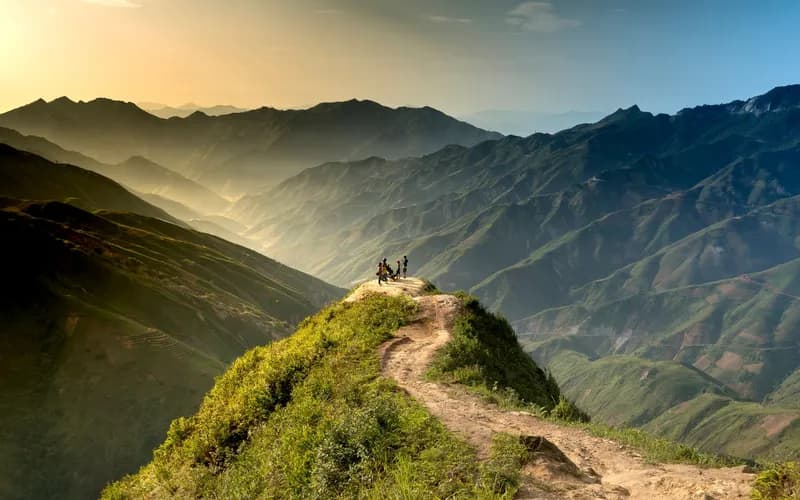
Ha Giang is the dramatic one: limestone plateau, deep canyons, high passes and the most photographed road in Vietnam. Most visitors treat it as a motorbike loop rather than a trek, which is precisely why walking sections of it works so well. The trekking is genuinely remote, the villages are less accustomed to visitors, and the logistics are harder. Our slow traveller's guide to the Ha Giang loop covers how to structure the region without turning it into a rally.
Pu Luong, in Thanh Hoa province, is the gentlest of the four and the most underrated. Rolling limestone hills, bamboo waterwheels, rice terraces at a human scale, and day walks of three to five hours between homestays that are comfortable without being resorts. It is four hours from Hanoi, which makes it the best choice for a first multi-day trek or for travellers with mixed fitness in the group. We describe the reserve in detail in our portrait of Pu Luong.
Mu Cang Chai and the Yen Bai terraces are seasonal specialists. The walking is moderate, the terraces are the most spectacular in the country, and the window that makes them famous is narrow. Outside the water-pouring season in May and June and the harvest in late September and October, the landscape is green or brown rather than gold, and the region empties. Our account of harvest-season Mu Cang Chai explains the timing.
Mai Chau, closer to Hanoi, deserves a mention as the softest option: flat valley cycling and short walks between Thai stilt-house villages, suitable for families and for anyone who wants the aesthetic without the ascent.
Grades: what easy, moderate and hard actually mean here
Operator grading in Vietnam is inconsistent, so translate it yourself. Ask for three numbers: daily distance in kilometres, total ascent in metres, and hours on the trail.
As a working scale for the north:
- Easy: 8 to 12 kilometres a day, under 400 metres of ascent, four to five hours including stops. Mai Chau, lower Pu Luong.
- Moderate: 12 to 16 kilometres, 400 to 800 metres of ascent, five to six hours. Most Sapa and Pu Luong itineraries sit here.
- Hard: 15 to 20 kilometres, 800 metres or more, six to eight hours, often on unmaintained paths. Remote Ha Giang, the Ta Xua ridge, Fansipan by foot.
Two local factors inflate every grade. The first is surface: after rain, red clay paths become genuinely treacherous and a moderate day becomes a slow, careful one. The second is heat and humidity, which from May to September make a 12-kilometre day feel considerably longer than the same distance in Europe.
If you want Fansipan, be clear about what you are buying. The cable car takes 15 minutes; walking it is a demanding two or three days with a guide and an overnight at altitude, and it costs several times more than a village trek.
Get matched with up to 5 trusted Vietnam agencies
- Free
- No obligation
- Up to 5 agencies
Season: the single biggest variable
Northern Vietnam has a real winter and a real wet season, and both matter more than most itineraries admit.
March to May is arguably the best all-round window: dry, clear, warm but not oppressive, with green terraces and flowering trees. Late May and June bring the water-pouring season, when the terraces are flooded and mirror the sky, alongside rising heat and the first heavy rain.
July and August are the wettest months. Trails are slippery, leeches appear in the forest, landslides close mountain roads with little warning, and river crossings can become impassable. Trekking is still possible with a good guide and flexible plans, but do not schedule anything tight afterwards.
September and October are the classic season: harvest gold in the terraces, stable weather, comfortable temperatures. They are also the busiest, and homestays in Mu Cang Chai and Sapa need booking well ahead.
November to February brings clear, cold, often misty conditions. Nights in the high villages drop close to freezing and occasionally below it; frost and even snow reach Sapa and the Dong Van plateau in some years. Homestays are heated by a wood fire and a blanket, nothing more. Walking is superb if you have the right layers and are prepared for short days.
Guides: why you should hire one, and whom
Independent trekking is legal on most trails, and plenty of people do it. Hiring a local guide is still the right call in almost every case, for three reasons: navigation on unmarked and constantly changing farm paths, permission to pass through and stay in villages where hospitality is negotiated rather than transacted, and direct income to the community you are walking through.
The distinction that matters is between a guide from the villages you will walk through and a guide sent from a city office. Ask directly: which village are you from, and do you know the households where we will sleep. In the Sapa valleys, guiding cooperatives run by Hmong and Dao women have been established for years and are the benchmark. In Ha Giang and Pu Luong the equivalent is a homestay owner who guides, or a small provincial operator with named local staff.
Do not assume fluent English. Many excellent local guides have functional rather than polished English, learned informally. That is usually fine and occasionally frustrating; if detailed cultural interpretation matters to you, say so when booking and expect to pay more.
Homestays and what a night costs
The sleeping arrangement on a northern trek is usually a stilt house: a raised wooden floor, a communal room with mattresses and mosquito nets in a row, a shared bathroom, and dinner cooked by the family and eaten together.
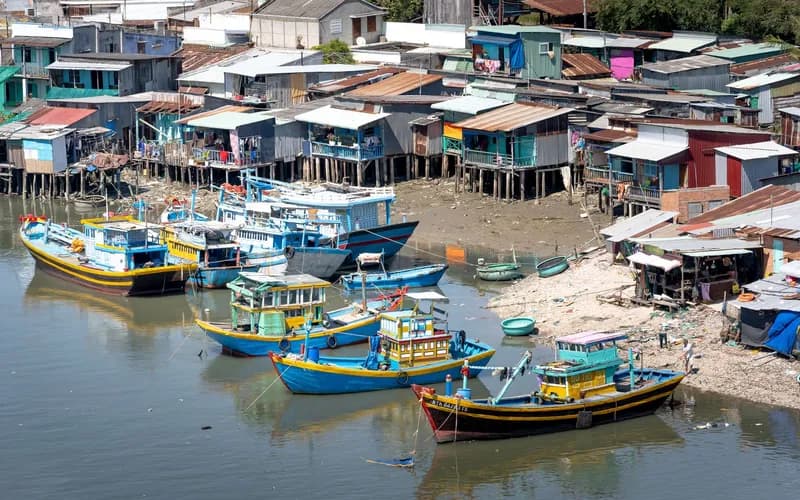
Prices vary by region and standard. A basic village homestay with dinner and breakfast typically runs from around 250,000 to 500,000 dong per person; upgraded bungalow-style homestays in Pu Luong and the Sapa valleys, with private rooms and hot water, sit higher. Rice wine will be offered. Declining politely is entirely acceptable, and so is accepting one small glass and then switching to tea.
The etiquette is not complicated but it is real: shoes off at the threshold, ask before photographing anyone, do not step over someone lying down, and let the host serve. Our article on temple, homestay and village etiquette in Vietnam covers the details worth knowing before you arrive.
Permits, paperwork and border zones
Most trekking in the north requires no permit. The exception is the border zone. Parts of the Dong Van and Meo Vac districts in Ha Giang sit within a restricted frontier area, and foreign visitors have historically needed a permit issued locally, costing a nominal amount and usually arranged by a guesthouse or operator in minutes. Requirements have shifted repeatedly, including after the 2025 provincial reorganisation, so treat it as something to confirm on arrival rather than a settled fact.
Carry your passport, not a photocopy, when travelling in border districts. Homestays are legally required to register overnight foreign guests with local police, which is routine and involves handing over your passport for a few minutes at check-in.
Travel insurance is worth checking specifically for trekking. Many standard policies exclude activity above a set altitude or require that you are accompanied by a licensed guide.
Money: what a fair price looks like
Rough 2026 benchmarks for a guided trek, per person, including guide, homestay, meals and local transfers:
- Sapa valley day trek with a local guide: roughly 40 to 80 US dollars a day.
- Pu Luong, two to three days: from about 150 to 250 US dollars for the package.
- Ha Giang, three to four days combining walking and road transfer: roughly 100 to 250 US dollars depending on standard.
- Fansipan on foot with a guide: around 120 to 200 US dollars for two to three days.
Prices well below these ranges usually mean a guide who is being underpaid, a group that is too large, or a shopping stop built into the day. Prices well above them should buy something identifiable: private rooms, a lead guide plus porter, or a genuinely remote route.
Kit that matters, and kit that does not
Bring proper footwear with grip and ankle support, a light waterproof shell, quick-dry layers, a headtorch, a refillable bottle with a filter or purification tablets, and a small first-aid kit with blister plasters and rehydration salts. In the cold months add a warm mid-layer, gloves and a hat; homestays are unheated.
You do not need technical mountaineering equipment, trekking poles for gentle regions, or a large pack; most multi-day itineraries move your main bag by road while you walk with a daypack. Leeches are the one item worth preparing for in the wet season: long socks, and salt or repellent applied to boot tops.
Red flags when booking
Be wary of an operator who will not name your guide's home village, who quotes a price without stating group size, who cannot give you daily distance and ascent, who includes a visit to a handicraft or jewellery workshop in a walking day, or who guarantees weather-dependent scenery outside its season. Be equally wary of any itinerary that promises wildlife sightings; northern Vietnam's forests are beautiful and largely emptied of large mammals, and honest operators say so.
What to Do Next
- Write down your three answers: what the walking is for, how many consecutive days you can manage, and how much discomfort buys how much quiet.
- Pick the season first and the region second. If you can only travel in July, choose Pu Luong or Mai Chau rather than high Ha Giang.
- Shortlist two or three operators and ask each for daily distance, ascent, group size and your guide's home village.
- Confirm current permit requirements for any border district on the itinerary once you are in Vietnam, not months before.
- Check that your insurance covers trekking at the altitudes and in the conditions on your route.
- Book homestays directly where you can, especially in harvest season, and pay in cash on arrival rather than through an aggregator.
- Leave the last day of your trek unscheduled. Weather in the north closes roads and trails often enough that a spare day is not optimism, it is planning.
Frequently Asked Questions
Do I need a guide to trek in northern Vietnam?
Not legally in most areas, but practically yes. Farm paths change with the seasons and are rarely marked, villages expect an introduction rather than an arrival, and a local guide is the mechanism by which your money reaches the community you are walking through. The exception is well-worn day routes near Sapa town, which independent walkers manage without difficulty.
Which region is best for a first multi-day trek?
Pu Luong. The daily distances are manageable, the homestays are comfortable, the access from Hanoi is straightforward and the scenery is genuinely lovely rather than merely convenient. Sapa's outer valleys are a close second if you want more elevation and a stronger cultural dimension.
When is the best time to trek in the north?
March to May and late September to early November are the strongest windows: stable weather, comfortable temperatures and clear views. Late May and June suit travellers who specifically want flooded terraces. July and August are wet and slippery, and December to February are cold but often beautifully clear.
How fit do I need to be?
For an easy or moderate itinerary, enough to walk five hours over uneven ground on consecutive days. Sustained hills matter more than distance. If you can manage a long hilly day walk at home without suffering the next morning, you will be comfortable on most northern routes. Fansipan and remote Ha Giang routes require genuine hill fitness.
What does a trekking homestay actually involve?
A raised wooden house, mattresses with mosquito nets in a shared room, a basic bathroom, and dinner cooked and eaten with the family. Expect around 250,000 to 500,000 dong per person with meals in a basic house, more for private rooms and hot water. Bring a torch, earplugs and a warm layer for the night.
Do I need a permit for Ha Giang?
Parts of the border districts around Dong Van and Meo Vac have required a locally issued permit for foreign visitors, obtained cheaply and quickly through a guesthouse or operator. The rules have changed several times, including after recent provincial reorganisation, so confirm the current position with your accommodation on arrival rather than relying on older guidance.
Can I trek in northern Vietnam in the rainy season?
Yes, but with adjusted expectations. Choose lower and gentler terrain, plan shorter days, expect mud and leeches, and build in flexibility for landslides and closed roads. Mornings are often clear and the rain arrives in the afternoon, so an early start is the single most useful adaptation.