Mu Cang Chai: Vietnam's Rice-Terrace Country, at Harvest Pace
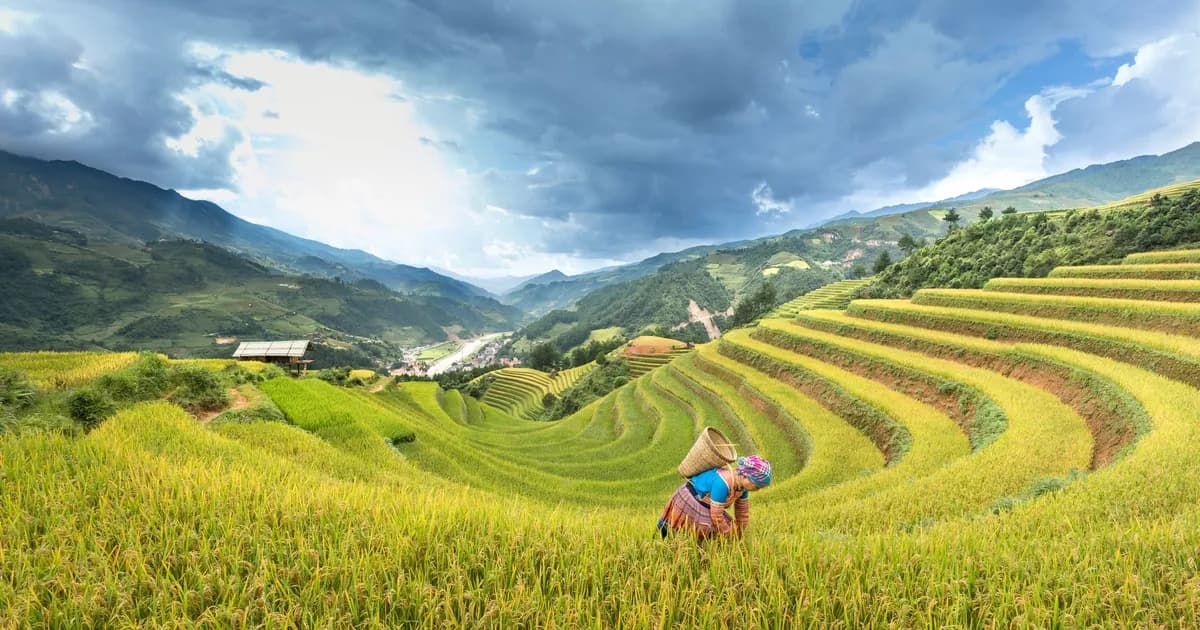
There are landscapes that reward a photograph and landscapes that reward a stay, and Mu Cang Chai belongs firmly to the second. In this remote district of Yen Bai province, in the mountainous north-west of Vietnam, generations of Hmong farmers have carved the hillsides into vast staircases of rice paddies that follow the contours of the land for as far as the eye can see. When the light is right and the terraces are full, it is one of the most extraordinary human-made landscapes in Asia. But the terraces are not a viewpoint to be ticked off; they are a working agricultural world, and the way to understand them is to slow down and move through them on foot.
Most travellers who make it this far arrive for a day, snatch their photographs from the roadside passes and leave. That is a shame, because Mu Cang Chai gives its best to those who stay. A few unhurried days here, walking between villages, sharing meals in a homestay and watching the farmers work, turns a scenic detour into one of the most memorable stretches of a northern Vietnam trip.
Where Mu Cang Chai is and why it stays quiet
Mu Cang Chai sits deep in the north-west, roughly halfway between Hanoi and the Chinese border, reached by a long and winding road that keeps casual tourism at bay. It lies over the dramatic Khau Pha Pass, one of Vietnam's four great mountain passes, and the journey in is part of the experience: hours of switchbacks, river valleys and roadside hamlets that make you feel the distance you have travelled. Because it is genuinely far and there is no airport nearby, the district has been spared the crowds and the concrete that have reshaped better-known northern destinations.
That remoteness is precisely its gift. Where some northern towns now feel processed, Mu Cang Chai remains a working farming district first and a tourist destination second. The terraces belong to families who still cultivate them by hand, and daily life continues at the rhythm of the seasons rather than the tour bus. For a traveller who wants to feel the real texture of upland Vietnam, that authenticity is worth the long road in.
One request. Up to five tailored proposals.
Skip contacting agencies one by one — share your trip once and let up to five trusted Vietnam agencies come to you. Free, with no obligation.
Get my free quotesThe terraces, and the hands that made them
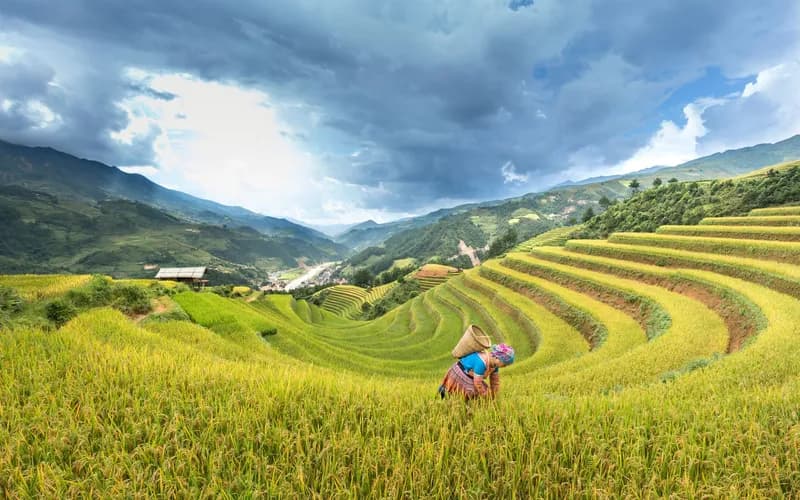
The rice terraces of Mu Cang Chai are the work of the Hmong people, who over many generations shaped the steep slopes into level fields that could hold water and grow rice at altitude. The most celebrated concentrations are around the communes of La Pan Tan, Che Cu Nha and Ze Xu Phinh, where the terraces climb in tight, curving tiers up hillsides so steep it seems impossible that anything could be farmed there at all. The famous "raspberry hill", a spiralling mound of terraces near La Pan Tan, has become the district's signature image.
What makes them moving up close is the understanding that this is not landscaping but livelihood. Every terrace wall is maintained by hand, every channel of water carefully directed from one level to the next, and the whole system represents centuries of accumulated knowledge about slope, soil and season. Walking among them, rather than viewing them from a car window, is what turns admiration into real appreciation.
When to go: the golden weeks and the watery ones
Timing is everything at Mu Cang Chai, because the terraces look completely different through the year. The signature golden season, when the ripening rice turns the hillsides to shimmering amber, falls in the harvest weeks of roughly mid-September to mid-October. This is the moment most photographers aim for, and the fields are at their most spectacular, though it is also the busiest and accommodation books up well ahead.
The other great season is the "watering" period, around May and June, when the farmers flood the terraces to prepare for planting and the fields become vast mirrors reflecting the sky. This is quieter, greener and arguably just as beautiful in a different register. Outside these windows the terraces are still handsome but less dramatic, so if the landscape is your reason for coming, plan your trip around one of these two seasons. Our guide on building a Vietnam itinerary around the weather can help you slot Mu Cang Chai into a wider northern loop at the right time of year.
Get matched with up to 5 trusted Vietnam agencies
- Free
- No obligation
- Up to 5 agencies
Staying in a homestay
The single best decision you can make in Mu Cang Chai is to stay in a village homestay rather than a roadside hotel. Homestays here are simple, warm and increasingly well run, typically offering a mattress under a mosquito net, hearty home-cooked meals and the chance to spend an evening with a Hmong or Thai family. Waking in a village surrounded by terraces, with the mist still hanging in the valley, is an experience no viewpoint can match.
Staying locally also spreads your money directly into the community that maintains the landscape, which matters in a place where tourism income helps make farming viable. If homestays are new to you, it is worth reading our practical guide on how to stay in a Vietnamese homestay, which covers booking, costs and the small points of etiquette that make the stay better for everyone.
Walking, not driving, the valleys
Mu Cang Chai is made for walking. The trails that link the villages and thread between the terraces are the real way to experience the district, and even short, gentle walks reveal far more than the roadside stops. A local guide, often arranged through your homestay, adds enormously to the day: they know the paths, can introduce you to families, and can explain what you are looking at, from the farming cycle to the customs of the communities you pass.
For those who want more, longer treks connect Mu Cang Chai to the wider mountain country, and the district pairs naturally with other slow corners of the north. If you are drawn to this kind of upland travel, it sits comfortably alongside places like the Ha Giang Loop and the quieter valleys around Sapa, all of which reward the same unhurried, on-foot approach.
Beyond the terraces: the life of the district
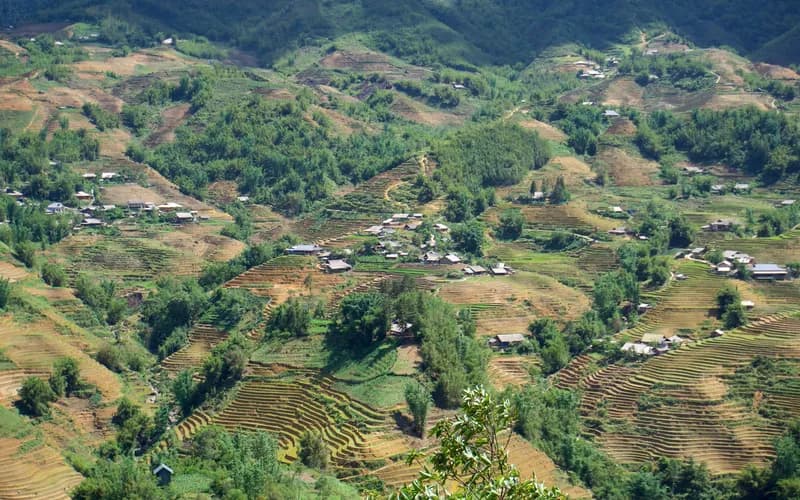
There is more to Mu Cang Chai than the fields, and staying longer lets you find it. The weekly markets in the surrounding communes are vivid, unshowy gatherings where hill communities come to trade, and they offer a window into everyday upland life that no organised tour can replicate. The Khau Pha Pass is also one of Vietnam's premier paragliding spots, with tandem flights over the terraces available in the autumn season for those who want to see the landscape from the air.
Above all, the district rewards simply being present. Long slow mornings watching the valley wake, conversations with the family you are staying with, an afternoon walk that turns into an invitation for tea: these are the moments that stay with people long after the photographs fade. It is the antithesis of checklist travel, and it is exactly what draws thoughtful travellers back to the northern mountains.
Getting there and getting around
Mu Cang Chai is reached overland from Hanoi, a journey of roughly seven to eight hours by road that most travellers break with a stop along the way. Sleeper buses run to the district, and many visitors travel by rented motorbike as part of a longer northern loop, though the mountain roads demand real riding experience and caution. However you come, treat the journey as part of the trip rather than an obstacle to it, in keeping with the spirit of our ultimate slow travel guide to Vietnam.
Once you are there, a motorbike or a hired driver is useful for reaching the main terrace viewpoints and trailheads, but the walking is best done on foot with a local guide. Give yourself at least two or three nights so that you are not rushing the road in, snatching a photograph and rushing straight back out again.
Practicalities: weather, cash and comfort
A few practical points make a Mu Cang Chai stay far more comfortable. The district sits at altitude, so even in the warm months the mornings and evenings are cool and the nights can be genuinely cold, especially in a simple homestay; pack warm layers and something windproof, even if the lowlands are sweltering. Rain is common in the wet months, and the dirt paths between terraces turn slick and muddy, so waterproof footwear with real grip is worth its weight.
Bring cash, and plenty of it. ATMs are scarce and unreliable this far into the mountains, and homestays, guides and small eateries deal almost entirely in physical money, so withdraw what you need in a larger town before you set off rather than assuming you can top up on arrival. Mobile signal is patchy in the valleys, which is part of the charm but means you should download offline maps and let someone know your rough plans before heading out on longer walks.
Finally, come with the right expectations. Mu Cang Chai is a working farming district, not a resort, and its comforts are simple: hearty food, warm hospitality and extraordinary views rather than spas and fine dining. That is precisely its appeal. Travellers who arrive ready to embrace the simplicity, to sit by a wood fire, share a family meal and rise with the valley, invariably leave the richer for it. The few small adjustments the mountains ask of you are a small price for one of the most rewarding corners of northern Vietnam.
What to Do Next
- Decide your season first: aim for the golden harvest of mid-September to mid-October, or the mirror-like watering season of May and June.
- Book a village homestay in or near La Pan Tan or Che Cu Nha rather than a roadside hotel, and reserve early for harvest season.
- Arrange a local walking guide through your homestay to explore the terraces on foot.
- Build in at least two or three nights, and break the long journey from Hanoi rather than attempting it in one push.
- Plan the wider trip with our plan your journey page so Mu Cang Chai connects sensibly to the rest of the north.
- Travel light on the road, carry cash, and pack warm layers for cool mountain mornings and evenings.
Frequently Asked Questions
When is the best time to visit Mu Cang Chai?
The two best windows are the golden harvest season of roughly mid-September to mid-October, when the ripe rice turns the terraces amber, and the watering season of around May and June, when the flooded fields mirror the sky. Both are spectacular in different ways.
How do I get to Mu Cang Chai from Hanoi?
By road, a journey of about seven to eight hours, usually by sleeper bus or private car, and often broken with a stop en route. Some travellers ride motorbikes as part of a longer northern loop, but the mountain roads require genuine experience.
How many days should I spend there?
At least two or three nights. The long journey in makes a day trip impractical, and the district rewards slow exploration on foot, so a longer stay is far more satisfying than a rushed visit.
Is Mu Cang Chai better than Sapa?
It is quieter and less developed than Sapa, with terraces that many consider even more dramatic and far fewer crowds. If you value authenticity and calm over convenience and infrastructure, Mu Cang Chai often wins.
Can I stay with a local family?
Yes. Village homestays are the best way to experience the district, offering simple accommodation, home-cooked meals and time with Hmong and Thai families, while putting your money directly into the community that maintains the terraces.
Do I need a guide to walk the terraces?
You can manage short walks alone, but a local guide, usually arranged through your homestay, greatly enriches the experience by showing you the paths, introducing you to families and explaining the farming life behind the landscape.