
The Mekong Delta rewards travelers who slow down, and nowhere does it more gently than Ben Tre. Most visitors meet the Delta the wrong way: a single rushed day trip from Ho Chi Minh City, a motorboat down a wide brown channel, a coconut-candy demonstration, and a bus back before dinner. You can do better, and Ben Tre is where to do it. Known across Vietnam as the "land of coconuts", this is a low, green, water-laced plain where life still moves at the speed of a rowboat. Spend two or three days here and the Delta stops being a sight to tick off and becomes a place you actually understand.
This is slow travel in its truest form: fewer kilometres, more attention. Ben Tre is not about spectacle. It is about coconut-lined canals barely wider than the boat carrying you, about families who cook what they grow, and about a rural rhythm that has not yet been flattened into a tour-group product. Here is how to travel the Delta's quiet side honestly, what to expect, and how to plan a trip that respects both the place and your own pace.
Why Ben Tre, and not just "the Mekong Delta"
The Mekong Delta is enormous, the river's final sprawl before it reaches the South China Sea. It is Vietnam's rice bowl and fruit basket, a region of braided channels and constant water. Because it is so large, "doing the Delta" can mean almost anything, and the most common version, the box-ticking day trip from Ho Chi Minh City, gives you the least.
Ben Tre concentrates the best of the Delta's slow character. It sits on islands and peninsulas formed by the river's branches, and it holds more than 75,000 hectares of coconut palms, which is why the whole area is nicknamed the land of coconuts. The coconut is not a tourist gimmick here; it is the local economy, the landscape, and the rhythm of daily work all at once.
A quick orientation note that will help on the ground. Following Vietnam's July 2025 administrative reform, which reduced the country from 63 provinces to 34, Ben Tre is no longer its own province on paper: it was merged, together with Tra Vinh, into an enlarged Vinh Long province. Nothing about the place, the towns, or the experience has changed. But new signage, addresses and some maps may now read "Vinh Long province", so do not be confused if the name Ben Tre is less prominent than you expected. The coconut canals are exactly where they have always been.
One request. Up to five tailored proposals.
Skip contacting agencies one by one — share your trip once and let up to five trusted Vietnam agencies come to you. Free, with no obligation.
Get my free quotesThe coconut backwaters: what slow really looks like
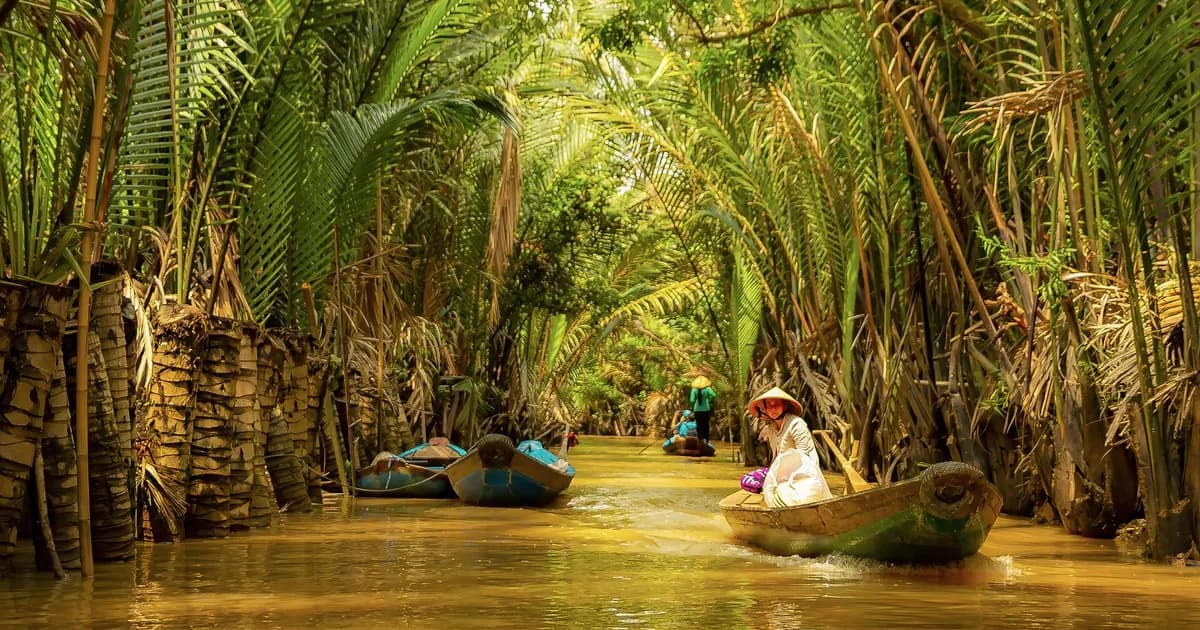
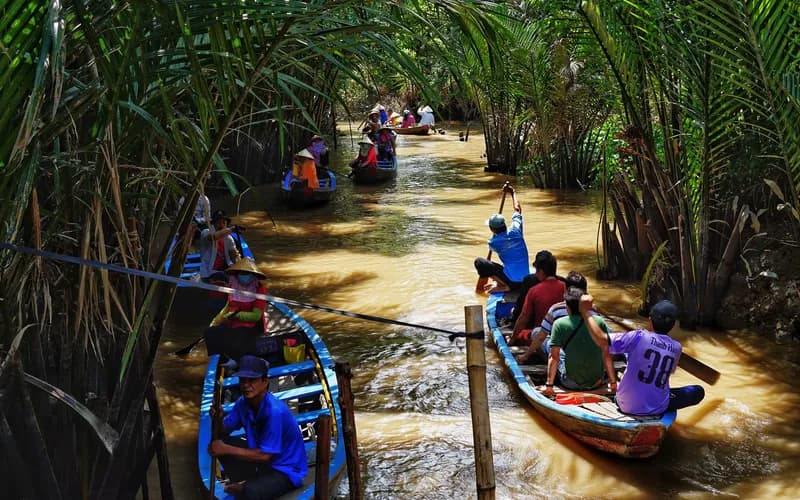
The reason to come is the backwaters. Forget the wide main channels where the engine boats run. The experience worth having is on the small canals, where the water narrows, the palm fronds close overhead, and you transfer to a rowboat. A local steers with a single oar, the engine noise drops away, and for a stretch of an hour or so you move through a green tunnel of coconut, nipa palm and water hyacinth. Birds, the creak of the oar, the occasional house on stilts: that is the whole of it, and it is enough.
The best of these trips are not the ones marketed loudest. They tend to start from quieter villages and smaller channels, often reached after a short cycle or walk through an orchard. If you base yourself well, you can string together a morning of rowing with an afternoon of cycling the coconut-lined paths between hamlets, stopping wherever a kettle is on.
A few honest expectations:
- The famous floating markets are quieter than they once were. Cai Rang and Cai Be still gather boats at dawn, but trade has shifted to roads and bridges, and the markets are smaller than the photographs suggest. They are still worth seeing if you go early; just arrive with realistic eyes.
- "Backwater" does not mean wilderness. This is a densely lived-in farming landscape. The beauty is in the human scale, not in emptiness.
- Some workshops are genuinely interesting; some are pure sales stops. Choose the former, described below.
If you want the wider context for how regions like this fit into a longer, calmer Vietnam itinerary, the ultimate slow-travel guide to Vietnam is a useful companion.
The coconut, used to the last fibre
Ben Tre's coconut craft is one of the few "workshop visits" in the Delta that earns the stop, because the process is genuinely close to zero-waste and every part of the nut becomes something.
- The husk is stripped into coir and woven into mats and rope.
- The white flesh is pressed for coconut milk and cooked down for the region's famous coconut candy, often still made by hand and wrapped one piece at a time.
- The hard shell is carved and polished into bowls, buttons and handicrafts.
- The water inside is simply drunk, fresh and cold.
Watching this in a small family workshop, rather than a coach-park showroom, tells you more about the Delta economy than any museum could. The work is repetitive and skilled, the margins are thin, and the buy-something pressure is usually gentle. Bringing home a bag of coconut candy or a coir mat is one of the more honest souvenirs in Vietnam, made where you stand. This kind of provenance-first encounter is exactly what experience-first travel in Vietnam is built around.
Get matched with up to 5 trusted Vietnam agencies
- Free
- No obligation
- Up to 5 agencies
Staying the night: homestays that mean it
A day trip can show you the canals. Only a night shows you the Delta. Ben Tre's homestays are its quiet triumph, and the good ones share a pattern: they sit on quiet islands or smaller canals, ringed by fruit orchards, run by families who cook what they grow and raise.
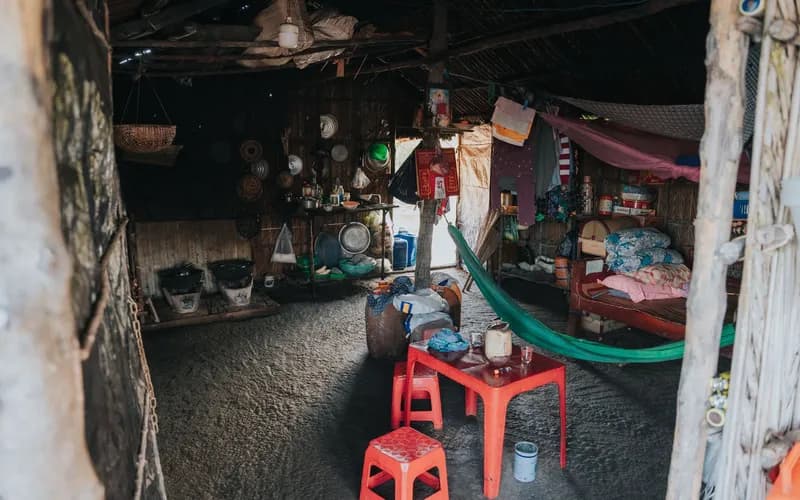
What this looks like in practice is dinner at the family table, river fish and garden vegetables and rice, then early to bed under a mosquito net and up at dawn with the household. Prices are modest. A basic bed in a simple homestay can cost only a few US dollars; something more comfortable, with a private room and better facilities, runs up toward around USD 40. Either way, the value is extraordinary, and the money goes directly to the family.
A few pointers for choosing well:
- Favour homestays on smaller canals over those clustered on the main tourist islands. The difference in quiet is enormous.
- Manage expectations on comfort at the lower price points. Simple means simple: a fan, a firm bed, shared bathrooms. That is part of the honesty of it.
- Eat what the family cooks rather than ordering off a tourist menu. It will be fresher and better.
Homestays also come with quiet obligations. A little reading on cultural etiquette for homestays and village visits goes a long way toward being a welcome guest rather than a paying one.
Can Tho as a base, and the dawn market question
If Ben Tre is the Delta's quiet heart, Can Tho is its capital. It is the largest city in the region and noticeably more energetic, with riverfront cafes, a night market and easy transport. Many travelers use it as a base, sleeping in the city and reaching quieter channels by day.
Can Tho's signature draw is the Cai Rang Floating Market, where boats gather before sunrise to trade produce wholesale. The advice here is simple and important: go early, before the tour groups arrive. By mid-morning the market is mostly tourist boats photographing each other. At dawn it is still, in part, a working market. Go for the light and the calm rather than for a spectacle that no longer fully exists.
This is also the right moment for an honest word about crowds. The Delta is one of the regions where mass day-tripping has thinned the magic in the most accessible spots, a pattern playing out across the country. If you want to understand that dynamic before you plan, how overtourism is redrawing Vietnam's travel map is worth reading. The practical takeaway is the same one this whole article makes: go slower, go earlier, and go to the smaller places.
How long, and how to shape the trip
The sweet spot for the Delta's slow side is two to three days. That is enough to do it properly and far better than the single-day dash. A simple, well-paced shape looks like this.
- Day one: travel from Ho Chi Minh City to the Ben Tre area in the afternoon, settle into a homestay on a quiet canal, dinner with the family.
- Day two: early rowboat through the backwaters, a coconut workshop, cycling between hamlets, a second night either in the homestay or moving to Can Tho.
- Day three: pre-dawn visit to Cai Rang from Can Tho, a slow breakfast, then onward.
The thing to resist is the temptation to compress this into one day from the city. The single-day trip is the Delta's worst version: hours on the road for a couple of hours on the water, all of it crowded. Two or three days costs little more and changes the experience entirely.
What to Do Next
- Decide your base. Choose a Ben Tre homestay on a smaller canal for immersion, with Can Tho as an optional second base for the floating market and city comforts.
- Book direct where you can. Contacting a family homestay directly keeps more of your money local and often gets you onto the quieter channels.
- Plan the rowboat, not just the motorboat. Make sure your itinerary includes time in a hand-rowed boat on the narrow backwaters, which is the part that matters.
- Set your alarm for Cai Rang. If you want the floating market, commit to a pre-dawn start; otherwise skip it without guilt.
- Pack for simplicity. Light clothing, mosquito protection, a little cash in small notes, and low expectations about luxury at budget homestays.
- Build in slack. Leave the schedule loose enough to accept a neighbour's invitation, linger over lunch, or take a second loop through the canals.
Frequently Asked Questions
Is Ben Tre worth visiting over a day trip from Ho Chi Minh City?
Yes, clearly. The day trip is the weakest way to see the Delta: long road time, crowded boats, and a sales-stop circuit. Staying two or three days in Ben Tre, ideally with a homestay night, gives you the rowboat backwaters, the coconut craft and the rural rhythm that the day trip skips entirely.
Why do some maps now say Vinh Long instead of Ben Tre?
Because of Vietnam's July 2025 administrative reform, which cut the country from 63 provinces to 34. Ben Tre and Tra Vinh were merged into an enlarged Vinh Long province. The towns, canals and experiences are unchanged; only the provincial name on signage and addresses has changed.
How much does a homestay in Ben Tre cost?
Prices range from only a few US dollars for a basic bed in a simple family homestay up to around USD 40 for something more comfortable with a private room. The lower end means simple facilities; the value at every level is excellent, and the money supports the family directly.
Are the floating markets still worth seeing?
They are quieter than they once were, as trade has moved to roads and bridges. Cai Rang and Cai Be still gather boats at dawn. If you go very early, before the tour groups, they are atmospheric and worth it. Arrive late and you will mostly see tourist boats.
How many days should I spend in the Mekong Delta?
Two to three days is the sweet spot for the slow side. That allows a homestay night, a proper rowboat trip through the backwaters, time for the coconut workshops and cycling, and an early floating-market visit, without the punishing pace of a single-day trip.
What is the coconut "zero-waste" process I keep hearing about?
In Ben Tre almost every part of the coconut is used: husk into coir for mats and rope, flesh into milk and the region's hand-made coconut candy, shell into carved handicrafts, and the water simply drunk fresh. A small family workshop is the best place to see it.
Is the Mekong Delta good for cycling?
Very. The coconut-lined paths between hamlets are flat, shaded and quiet, ideal for slow cycling between a rowboat trip, a workshop and a homestay. Many homestays can arrange bicycles, and the gentle terrain suits riders of all levels.