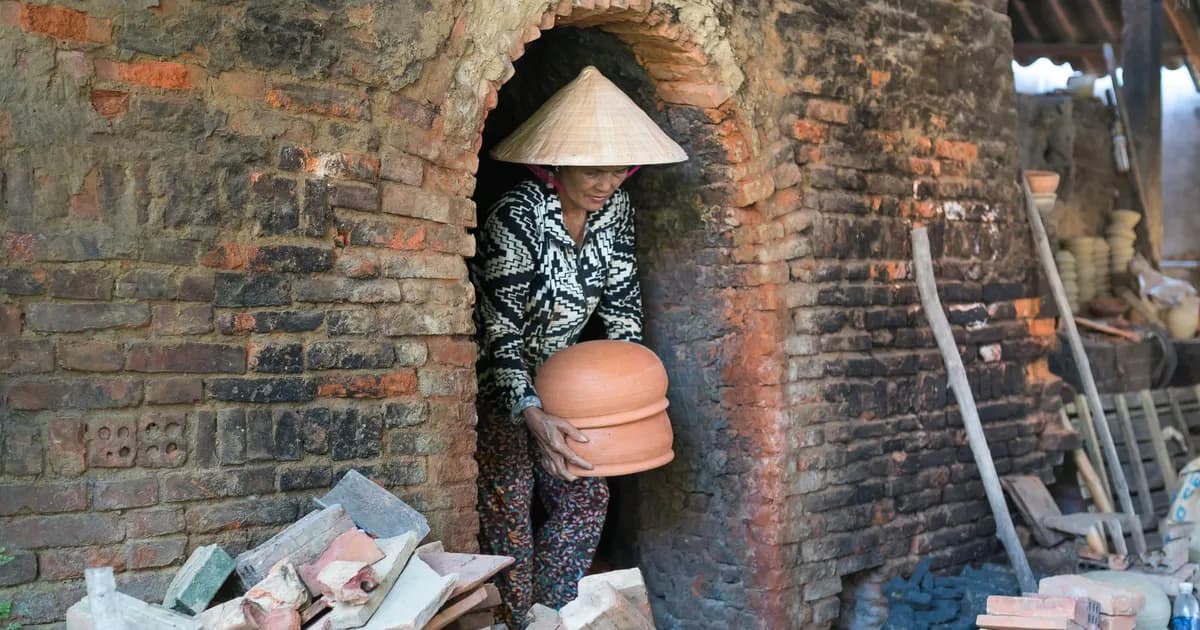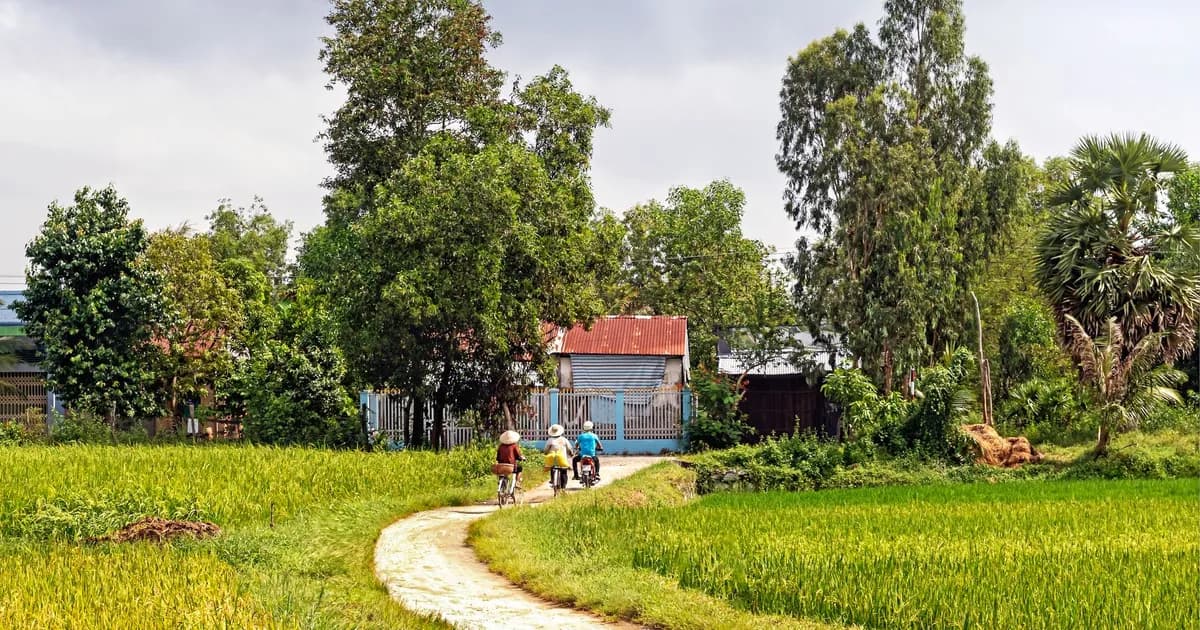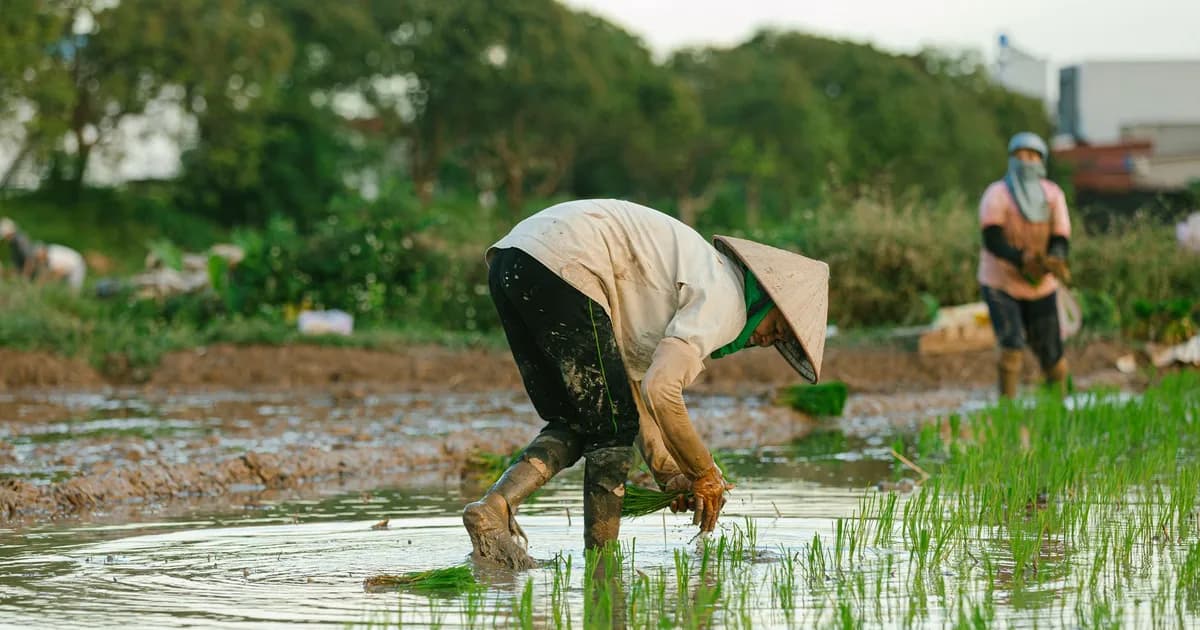

For most of the last decade, "rural tourism" in Vietnam meant a photograph: a conical hat in a rice paddy, a buffalo you paid to stand next to, a twenty-minute basket-boat ride bolted onto a day trip. That version still exists and still sells. But underneath it, something structural has been happening, and 2026 is the year it becomes visible. Vietnam now counts more than 600 agricultural and rural tourism models, a national certification scheme is being extended to cover community tourism services rather than just products, and from the first of January the three big rural development programmes have been folded into one. None of this is glamorous. All of it changes what a traveller can realistically expect from a night on a farm.
The Numbers Behind the Trend
Start with the scale of the rural economy itself. Something close to 63 percent of Vietnam's population lives in rural areas, which means rural tourism is not a niche add-on but a plausible income strategy for a very large number of households.
The One Commune One Product programme, universally shortened to OCOP, is the mechanism. Between 2021 and 2025 the country certified more than 8,400 products at three stars or above, bringing the national total to roughly 17,400 OCOP-registered products. Revenue from tourism connected to OCOP goods and traditional craft villages is now estimated at over 25,000 billion dong a year, somewhere around 15 percent of the total value of rural production.
Then the more sobering figure. Of those 600-plus agricultural and rural tourism models, only a little over 200 community tourism services or destinations have been assessed and recognised as three-star OCOP or higher. In other words, roughly two thirds of what is marketed as rural tourism in Vietnam has never been formally evaluated for quality, safety or benefit-sharing. That gap is the single most useful thing a traveller can know about this sector.
One request. Up to five tailored proposals.
Skip contacting agencies one by one — share your trip once and let up to five trusted Vietnam agencies come to you. Free, with no obligation.
Get my free quotesWhat Changes on 1 January 2026
From the start of 2026, Vietnam merged three previously separate national programmes into a single unified one: new rural construction, sustainable poverty reduction, and socio-economic development for ethnic minority and mountainous areas. Officials have described the consolidation as a turning point, and in budget terms it is: one programme, one set of criteria, one funding stream.
For the 2026 to 2030 phase, the Ministry of Agriculture and Environment has also signalled a shift in how OCOP itself works, moving from certifying individual products towards certifying regions and value chains, with a stated national target of 20,000 three-star-or-better OCOP products by 2030.
The practical translation is this. Money and technical support for homestays, farm visits and craft workshops will increasingly arrive through one channel rather than three, and it will be easier to direct at whole valleys and communes rather than single households. Where this works, you should see better signage, more consistent food-safety practice, and clearer pricing. Where it does not, you will see the same buffalo with a new laminated certificate.
Why Certification Matters to You, and Where It Does Not
OCOP is not a hospitality standard. It was designed for products: tea, honey, rice wine, lacquerware, dried fruit. Extending it to community tourism services is genuinely useful, because assessment covers things travellers care about, such as hygiene, documentation and whether the benefit stays in the commune. But it was never built to tell you whether the beds are comfortable or the host speaks your language.
Read a three-star OCOP recognition as a signal of legitimacy and local embeddedness, not as a rating of comfort. It tells you the operation has been inspected by someone and is producing a traceable local benefit. It does not tell you the shower is hot.
This distinction matters because certification is now being used in marketing. A farm stay advertising itself as OCOP-recognised is making a real claim, and one you can ask to see evidence of. A farm stay using the word loosely, in a brochure, is not making any claim at all.
Get matched with up to 5 trusted Vietnam agencies
- Free
- No obligation
- Up to 5 agencies
Where This Is Actually Happening
The geography of the shift is uneven and worth knowing.
- The northern uplands, where community tourism has the longest track record and where homestay clusters in Thai, Muong, Hmong and Tay villages have two decades of experience. Quality varies enormously within a single valley.
- The Mekong Delta, where fruit orchards, floating markets and coconut-processing workshops have been organised into farm visits for years and where several provinces are now pushing green and rural tourism hard at national trade fairs.
- The Central Highlands, where coffee and pepper farms have started offering harvest-season stays, processing demonstrations and cupping sessions rather than just a bag of beans at the gate.
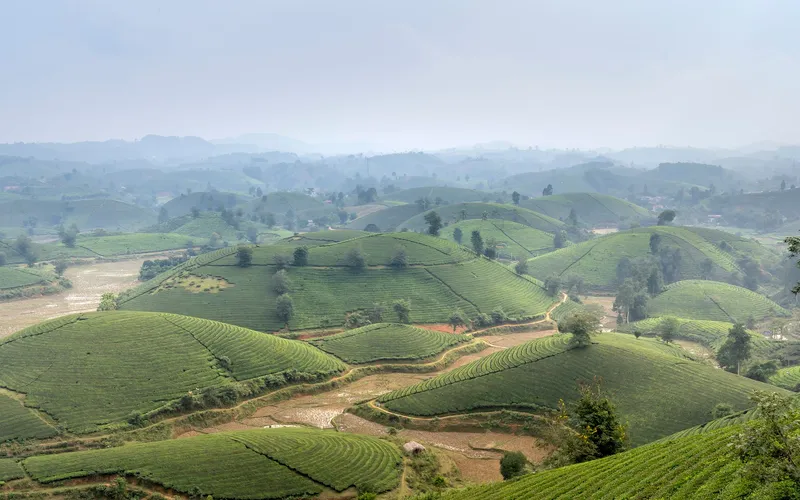
- The tea and stone-fruit plateaus of the northwest, where the seasonal calendar does most of the work. Our piece on Moc Chau's tea hills and plum orchards shows how that rhythm shapes a visit.
What these places share is a working landscape. What separates the good from the mediocre is whether the visitor is folded into that work or seated beside it.
What a Good Farm Stay Actually Looks Like
After enough nights in rural Vietnam, the pattern becomes clear. The good ones share a small number of traits, none of which appear in photographs.
The host family is still farming. If the rice has been replaced by a lawn and a swimming pool, you are in a hotel with an agricultural theme, which is a legitimate thing to want but a different product.
The day has a shape that is not built around you. Feeding happens at feeding time; the market run leaves when it leaves. You are invited to join, not performed for.
There is one activity done properly rather than six done briefly. A full morning making rice paper, or one tea harvest and processing cycle followed through to the cup, teaches you more than a carousel of fifteen-minute stations.
Food comes from within a few kilometres and the household eats it too. This is the most reliable single indicator of an honest operation, and it is easy to check: ask where you will eat, and with whom.
Pricing is legible. You are told what is included, what is extra and what goes to the guide, the cook or the neighbour whose buffalo you are photographing.
The Honest Limits
Three caveats, because this sector is being oversold.
First, comfort. Many genuine farm stays have thin mattresses, shared bathrooms, no insulation and mosquito nets rather than air conditioning. In the northern mountains between roughly November and February it gets genuinely cold, and heating is usually a blanket. This is not a failure of the format; it is the format.
Second, language. Outside established clusters, English is limited. The best rural experiences often require either a guide, a translation app and patience, or a willingness to spend an evening communicating with gesture and rice wine. Some travellers find this the point. Others find it exhausting by day three.
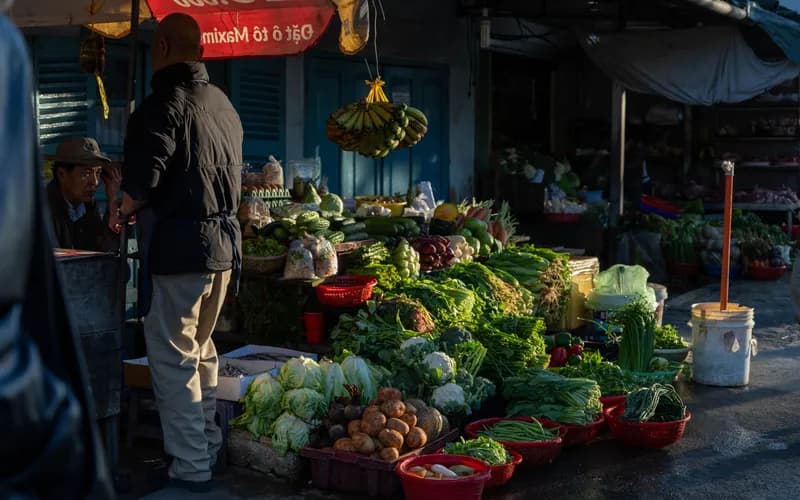
Third, authenticity theatre. As demand grows, a version of rural tourism is emerging that reproduces the aesthetics of farm life without the substance: costumes provided, tools that have never been used, a "harvest" staged out of season. It is not a scam, exactly. It is just an expensive photograph. Our reading of the wider move towards experience-first travel in Vietnam traces how quickly this kind of packaging follows genuine demand.
What It Costs and Where the Money Goes
Rural stays remain among the best-value accommodation in Vietnam, and that is precisely why the economics deserve attention.
A simple room in a village homestay, dinner and breakfast included, still costs a fraction of a mid-range city hotel. A boutique farm stay with private bathrooms and a curated programme costs several times that and sits closer to resort pricing. Both can be honest; they are aimed at different travellers.
The question worth asking is not the price but the split. When you book a rural stay through a large international platform or as part of a packaged day trip, a significant share of what you pay may never reach the commune. Booking directly, or through a local operator who names the village and the family, changes that arithmetic. The OCOP framework is partly an attempt to make that benefit-sharing visible and auditable, which is the most interesting thing about it.
If you are choosing between formats, our guide to staying in Vietnamese homestays sets out what to expect from the classic village version, including etiquette and what to bring.
How to Read a Listing Before You Book
Five questions separate substance from staging, and all five can be asked by message before you pay.
What does the family farm, and what season am I arriving in? A host who answers precisely is a host who farms.
How many guests do you take at once? Two to three rooms is a household. Twenty rooms is a business, which may be fine, but it is a different thing.
Who cooks, and do we eat together? Shared meals are the clearest indicator of a genuine homestay rather than a rural guesthouse.
Is the activity seasonal or available year-round? A rice-planting experience offered in every month of the year is not a rice-planting experience.
What is not included? Transfers, guide fees, entrance tickets and alcohol are the usual gaps, and a good host lists them without being pushed.
For a wider view of how to find places that have not yet been packaged, see our guide to off-the-beaten-path Vietnam.
Why This Trend Suits Slow Travel Specifically
Agritourism is structurally incompatible with speed. A farm morning cannot be compressed; a tea processing cycle takes the hours it takes; the walk to the neighbouring hamlet is the content, not the transfer. Every attempt to do rural tourism quickly produces the photograph version.
That makes this the rare Vietnamese travel trend that rewards the traveller and the host in the same direction. Longer stays mean more meals bought locally, more nights paid for in the commune, and enough time for the household to stop performing. Two nights is the minimum at which a farm stay stops being a novelty. Three is where it becomes a memory. This is the thinking behind our slow travel charter, and rural Vietnam is where it applies most literally.
The unified rural programme, the OCOP extension and the 2030 targets will not change that. What they may do is raise the floor, so that the two thirds of rural tourism operations currently outside any quality framework have a reason to join one. That is a slow process, which is appropriate.
What to Do Next
- Pick your season before your province. Rural travel is seasonal by definition: harvest, planting, flowering and tea-picking calendars differ by region and determine what you will actually see.
- Commit to at least two nights in one place. One night is a photograph; two is a rhythm.
- Ask the five booking questions above by message before paying, and treat vague answers as answers.
- Check whether the operation holds a three-star OCOP recognition, and read it as a legitimacy signal rather than a comfort rating.
- Book directly with the household, or through a local operator who will name the village, so more of your money stays in the commune.
- Pack for the format: layers for upland nights, a torch, cash in small notes, and no expectation of hot water.
- Buy something made where you are staying. Local purchases are the most direct part of the value chain the OCOP programme is trying to build.
Frequently Asked Questions
What does OCOP actually mean?
OCOP stands for One Commune One Product, a national programme that certifies local products and, increasingly, community tourism services on a star rating. Three stars is the entry-level recognition and indicates provincial-level assessment. It is a legitimacy and traceability scheme rather than a hospitality star rating.
Is a farm stay the same as a homestay?
Not quite. A homestay means you are staying in a household, whatever that household does. A farm stay means the household's work is agricultural and that work is part of the visit. Many Vietnamese village homestays are also working farms, but plenty of rural guesthouses use the word without any farming attached.
How much should I expect to pay?
Simple village rooms with two meals included remain among the cheapest accommodation in Vietnam, well below mid-range city hotel rates. Boutique farm stays with private bathrooms and structured programmes cost several times more and overlap with resort pricing. Ask what is included, because transfers and guide fees are frequently extra.
Is rural Vietnam comfortable enough for a longer stay?
It depends on the operation and your tolerance. Expect firm beds, occasional shared bathrooms, limited hot water and genuine cold in the northern mountains during the winter months. Boutique options solve most of this at a price. If comfort is a priority, filter for private bathrooms and read recent reviews rather than looking at photographs.
Do I need a guide?
Outside established homestay clusters, a guide or a local fixer makes a large difference, mainly for language and for arranging transport between villages. In the better-developed valleys of the north and in the Delta, independent travel with a translation app works well. A guide also tends to improve what the household is willing to show you.
Which region should a first-timer choose?
The northern uplands have the deepest experience and the widest range of quality, the Mekong Delta is the easiest to reach and the most forgiving logistically, and the Central Highlands are the most interesting if coffee or pepper is the draw. Choose by season and by travel time from your entry point rather than by reputation.
Is any of this actually sustainable?
Some of it. Rural tourism keeps income in the countryside and gives craft skills an economic reason to survive, which is real. It also brings traffic, waste and price inflation to places with little capacity to absorb them. The unified rural programme and the OCOP extension are attempts to manage that, and it is too early to say how well they work.