

Vietnam has reached its Michelin moment, and the most interesting part is not the stars. On 4 June 2026, in Hanoi, the MICHELIN Guide unveiled its fourth Vietnam selection, covering Hanoi, Ho Chi Minh City and Da Nang. The headline numbers are real and worth knowing: 193 establishments in all, 11 restaurants holding One Star, 72 carrying the Bib Gourmand, 110 in the MICHELIN Selected list, and 3 with the Green Star for sustainable gastronomy. For the first time, Vietnam reached double-digit Stars. But for a traveler who cares about depth over distance, the Guide's arrival means something quieter and more useful than a ranking to chase.
The real story is that one of the world's most influential food authorities has put its weight behind Vietnamese cooking, including the humble, everyday, street-level food that locals have always known was world-class. That recognition is reshaping food tourism here, drawing new attention, new diners and new money toward kitchens that were thriving long before any inspector arrived. Used well, the Guide can make you a better, slower eater. Used badly, it becomes just another checklist to race through. This article walks through what the 2026 selection actually says, what it means on the ground in each of the three cities, and how to let it deepen a trip rather than rush it.
What the 2026 selection actually contains
The fourth edition is the largest yet, and the shape of it tells you where Vietnamese dining is heading. Of the 193 establishments, the One-Star list grew to 11, with 2 new Stars added, marking the first time the country has held double-digit Stars. The Bib Gourmand list, which recognises good food at modest prices, reached 72 addresses, 11 of them new. A further 110 restaurants sit in the MICHELIN Selected category, the Guide's recommended-but-not-starred tier. And the Green Star community, honouring sustainability, grew to 3, with 1 new entry.
The new additions were spread across the three cities: 7 in Hanoi, 11 in Ho Chi Minh City, and 4 in Da Nang. That distribution is itself a useful map of the country's dining character, which we will come to. It is also a reminder that the Guide is not a static league table but a living document, expanding as inspectors return, revisit and reassess, so a place that was unlisted last year may well appear next, and the absence of a Star says nothing about whether a kitchen is worth your time.
It is also worth noting the wider context. 2026 marks the 100th anniversary of the MICHELIN Star globally, so Vietnam's biggest selection to date lands in a milestone year for the institution itself. The symbolism matters: a cuisine long beloved by travelers and food writers is now woven into the Guide's centenary story. For a country whose food has been an open secret for decades, that timing reads less like a discovery and more like an overdue acknowledgement, and the size of the list, growing edition on edition, suggests the inspectors are still finding more to reward each year.
One request. Up to five tailored proposals.
Skip contacting agencies one by one — share your trip once and let up to five trusted Vietnam agencies come to you. Free, with no obligation.
Get my free quotesThe new Stars worth understanding
Two of the new One-Star restaurants capture what is changing in Vietnamese fine dining, and both reward a closer look than a simple "go here" recommendation.
The first is ONVIT in Hanoi, the first Korean restaurant in Vietnam to win a Star. It serves a Korean-Vietnamese tasting menu, a genuine cross-cultural kitchen rather than a novelty, and its recognition signals how cosmopolitan the capital's high end has become. The second is Upstairs in Ho Chi Minh City, an intimate four-table room above a wine bar serving a modern Vietnamese tasting menu rooted in Central Vietnamese traditions. Four tables is the whole point: this is small, personal, chef-driven cooking, the kind of place where a meal is a conversation rather than a transaction. That rootedness in regional tradition is worth pursuing at the source too; the layered, ceremonial cooking of the old imperial capital, explored in our piece on Hue's imperial cuisine, is one of the clearest examples of how deeply Vietnamese food is tied to place.
What both share is a sense of craft and provenance over spectacle. They are not large, they are not loud, and they reward travelers who book ahead and give the meal time. That is a very different proposition from collecting Stars across a city in a week. It is also a reminder that the Guide's recognition increasingly flows toward kitchens with a clear point of view and a deep relationship with their ingredients, rather than to the most opulent dining rooms.
How each city eats: Hanoi, Ho Chi Minh City, Da Nang
The Guide's three-city scope is not arbitrary. Each city has a distinct food personality, and understanding that helps you decide where to spend your appetite.
Ho Chi Minh City leads on innovation. It has the most Stars of the three and a creative, modern cooking scene that absorbs influences and pushes them forward. If your interest is contemporary Vietnamese gastronomy and ambitious tasting menus, this is the city with the deepest bench, and the place where young chefs are most likely to reinterpret a regional classic rather than simply reproduce it. It is also where one restaurant newly joined the Green Star community, recognised for zero-waste, plant-based cooking, an encouraging sign of where ambition is heading, and a hint that sustainability is no longer a niche concern but part of the city's mainstream culinary conversation.
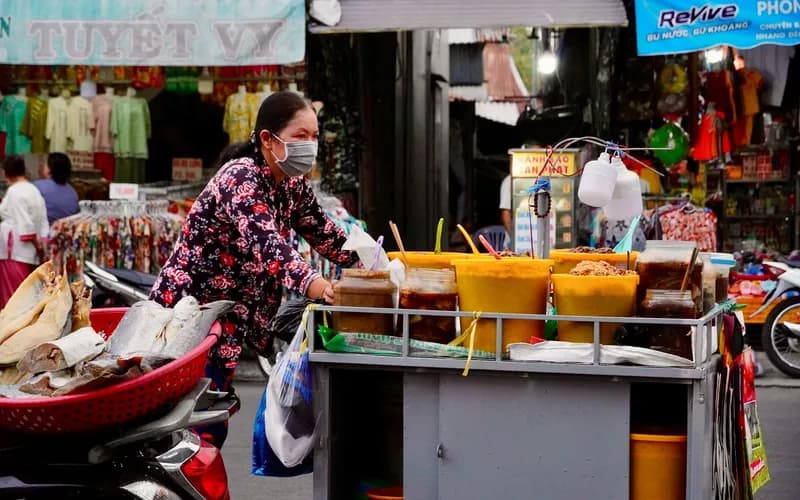
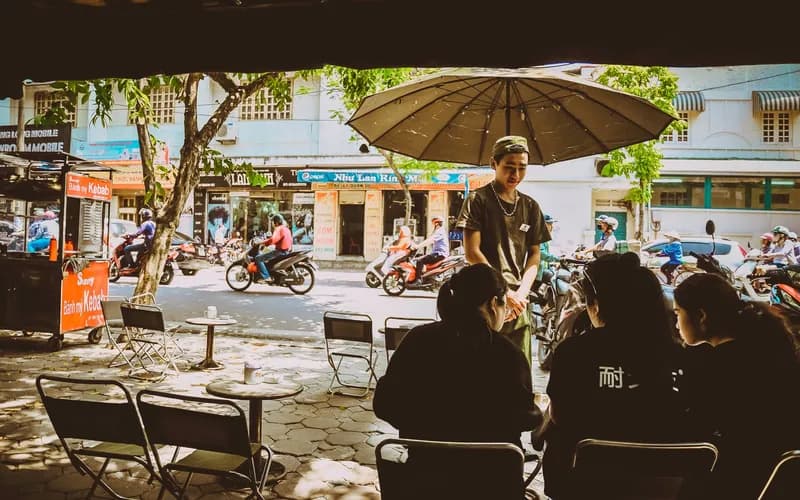
Hanoi balances two worlds. It pairs a deep street-food culture, the source of so much of what defines Vietnamese eating, with a growing high-end scene and centuries of history layered into its old quarter. Eating in Hanoi well means moving between a plastic stool on a morning pavement and, if you wish, an evening tasting menu, without treating either as more "real" than the other. The city rewards patience above all: its best bowls are tied to the time of day, the season and the particular corner where a family has cooked the same thing for decades, so the more slowly you move through it, the more it gives back.
Da Nang is the value story. The Guide highlights it for excellent, affordable street food and good-value meals. For a slow traveler watching a budget, Da Nang and the wider central coast offer some of the most satisfying eating in the country at the gentlest prices, the kind of meals where a few dollars buy a bowl you will remember for weeks. The four new additions here show the Guide is paying real attention to the centre, not just the two big metros, and it confirms what regional food lovers have long argued: that some of Vietnam's most distinctive cooking lives outside its largest cities.
If you want to go deeper on the broader culinary landscape behind these distinctions, the 2026 guide to Vietnamese food sets out the street-food and trend context in full.
Get matched with up to 5 trusted Vietnam agencies
- Free
- No obligation
- Up to 5 agencies
Bib Gourmand: the list slow travelers should actually use
If you take one practical thing from the 2026 selection, make it this: the Bib Gourmand list is the one to follow. With 72 addresses and a remit of genuinely good food at modest prices, it is a curated map of humble specialists, the single-dish kitchens, family bun cha counters and regional noodle shops that reward eating deeply rather than expensively. These are the places where a recipe has been refined over a generation or two, where the broth has been simmering since before dawn, and where the menu rarely runs to more than a line or two.
This matters because the Bib Gourmand aligns almost perfectly with how slow travel works. It points you toward small kitchens that have done one thing for years, often in one neighbourhood, where the cooking is the point and the bill is small. Following a Bib Gourmand trail through a single district, on foot, over several days, is a far richer experience than ticking Stars off across a city. It is the edible version of the same shift toward experience-first travel that UNRUSH has tracked across the country.
A few ways to use it well:
- Treat it as a neighbourhood guide, not a citywide bucket list. Pick an area, eat through its Bib entries slowly, and let the gaps fill with whatever the locals queue for.
- Go at the right time. Many specialists sell one dish and sell out; arrive when they open.
- Don't over-plan. The Guide is a starting point, not a schedule. Some of your best meals will be the unlisted stall next door.
The honest caveat: don't turn the Guide into a checklist
Here is where UNRUSH parts company with the hype. A Michelin selection invites a particular kind of travel: the Star hunt, the multi-city dash, the meal booked for the badge rather than the food. That is the opposite of eating well.
The point of the Guide, for a slow traveler, is not to collect recognitions. It is to follow craft and provenance, support small kitchens, and let food anchor longer stays in fewer places. The Guide validates what locals always knew, that Vietnam's everyday food is exceptional, and the best response is to eat more locally and more attentively, not to sprint between starred dining rooms.
There is a real risk worth naming. Recognition brings crowds, queues and rising prices to newly listed places, and it can pull travelers away from the unlisted stalls that are often just as good. It also feeds a broader move toward spending more on fewer, more curated experiences, a trend we have examined in Vietnam's premiumization shift; used thoughtfully that can mean eating better, but it can just as easily mean paying for a badge. The healthiest way to use the Guide is as one input among many: a prompt to eat curiously, balanced by your own wandering, local advice, and a willingness to sit down wherever the food smells right.
What to Do Next
- Pick one city, not three. Decide whether you want HCMC's innovation, Hanoi's balance of street and history, or Da Nang's value, and base yourself there long enough to eat properly.
- Build your shortlist from the Bib Gourmand first. Choose a handful of entries clustered in one or two neighbourhoods rather than scattered across the map.
- Book the one tasting menu that genuinely interests you. If a small, chef-driven room like a four-table tasting counter appeals, reserve it well ahead and give it a full evening.
- Leave most meals unplanned. Reserve the majority of your eating for stalls, markets and whatever locals recommend on the day.
- Eat in season and in place. Favour regional specialities where they belong, central dishes on the central coast, northern bowls in Hanoi, rather than chasing a single famous name everywhere.
- Travel slowly between meals. Walk the neighbourhood, talk to vendors, and let the food teach you the city rather than the other way around.
- Return to what you loved. If a single small kitchen wins you over, go back a second or third time rather than spreading yourself thin; the regulars know something the first-timers do not.
Frequently Asked Questions
What did the 2026 MICHELIN Guide Vietnam include?
The fourth Vietnam edition, announced on 4 June 2026 in Hanoi, covered Hanoi, Ho Chi Minh City and Da Nang with 193 establishments: 11 One-Star restaurants (2 new, the first time Vietnam reached double-digit Stars), 72 Bib Gourmand, 110 MICHELIN Selected, and 3 Green Star (1 new).
Which cities does the Guide cover, and how do they differ?
Three cities. Ho Chi Minh City leads on innovation and has the most Stars; Hanoi balances street-food culture with high-end dining and deep history; Da Nang stands out for excellent, affordable street food and good value. The new additions split 7 Hanoi, 11 HCMC, 4 Da Nang.
What are the notable new Stars?
ONVIT in Hanoi became the first Korean restaurant in Vietnam to win a Star, with a Korean-Vietnamese tasting menu. Upstairs in Ho Chi Minh City, an intimate four-table room above a wine bar, won a Star for a modern Vietnamese tasting menu rooted in Central traditions.
Is the Bib Gourmand better than the Stars for budget travelers?
For most slow travelers, yes. The Bib Gourmand recognises genuinely good food at modest prices, 72 addresses in 2026, and it points you to humble specialists and single-dish kitchens. It is arguably the most useful list for eating deeply and locally without a fine-dining budget.
What is a Green Star, and how many does Vietnam have?
The Green Star recognises sustainable gastronomy. Vietnam has 3 in 2026, with 1 new entry, including a Ho Chi Minh City restaurant honoured for zero-waste, plant-based cooking. It signals that sustainability is becoming part of the country's ambitious dining scene.
Should I plan my whole trip around Michelin restaurants?
No. The honest advice is to use the Guide as one input, not a checklist. Chasing Stars across cities works against eating well. Follow craft and provenance, support small kitchens, leave most meals unplanned, and let good food anchor a longer stay in one place.
Why does 2026 matter for the Guide in Vietnam?
It is the largest Vietnam selection to date and the first year the country reached double-digit Stars. It also coincides with the 100th anniversary of the MICHELIN Star globally, so Vietnam's biggest edition lands in a milestone year for the institution.