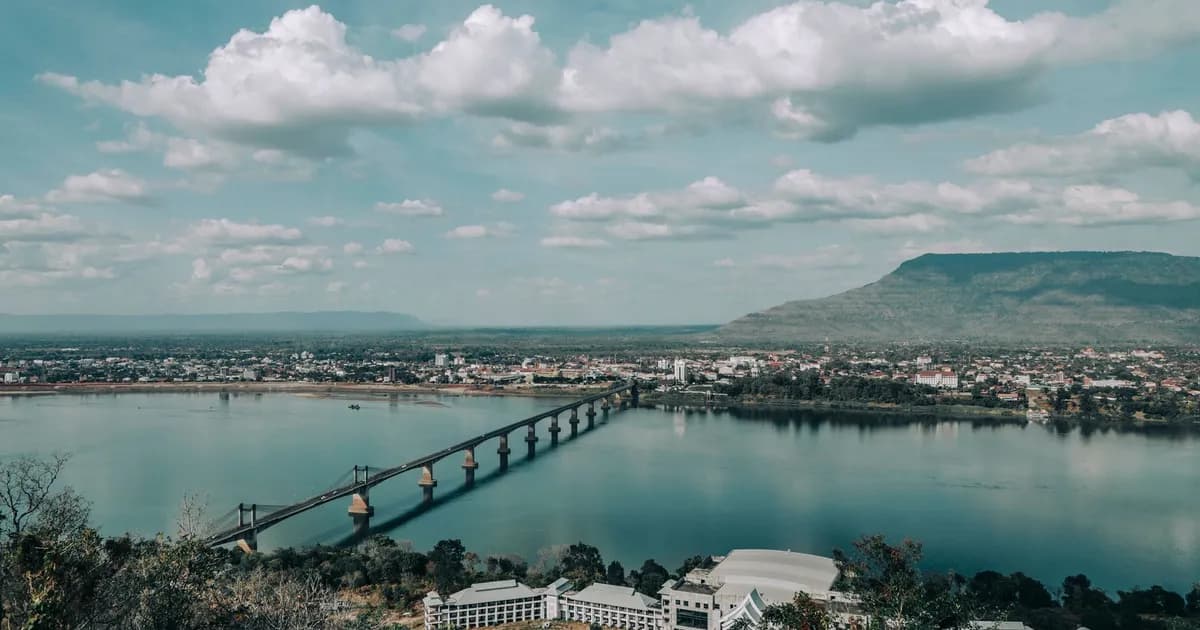
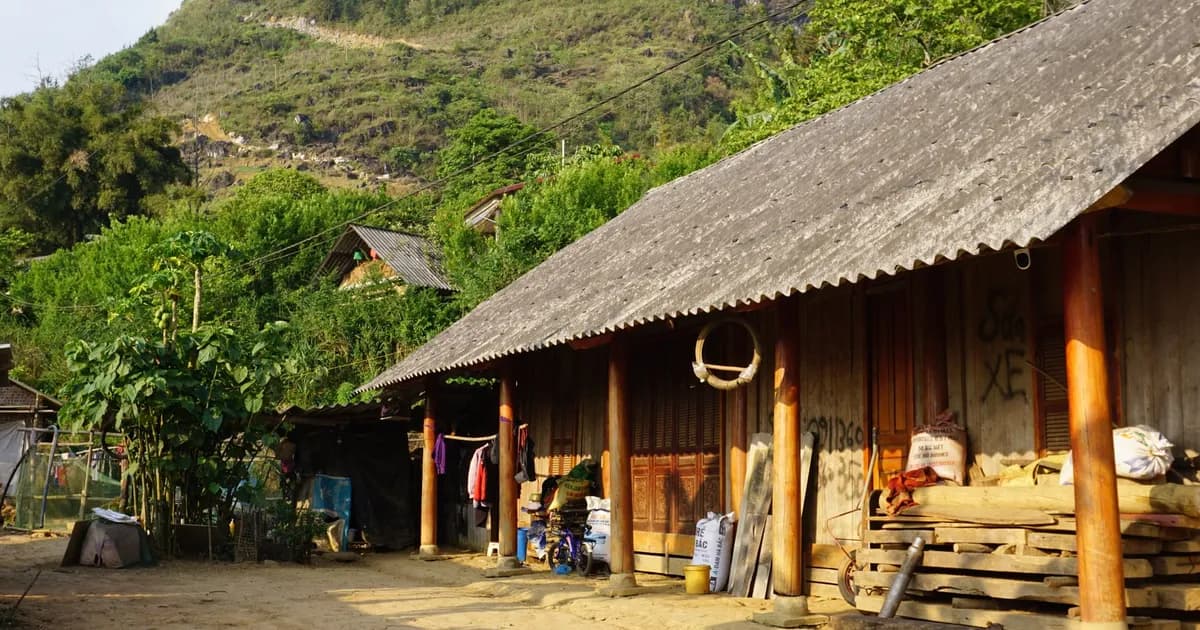
Phongsaly: Tea Mountains, Akha Trails and Laos's Far North
Phongsaly is the province most travellers look at on the map of Laos, calculate the travel time to, and quietly drop from the itinerary. It sits in the country's far northern tip, wedged between China's Yunnan province and Vietnam, reachable only by a long day of mountain roads or a broken sequence of river boats and vans. There are no tubing bars, no banana-pancake street, no night market selling the same elephant-print trousers you saw three towns ago. What there is instead: tea trees said to be four centuries old, Akha villages strung along ridges at 1,200 metres, morning fog that fills the valleys like poured milk, and a pace so unhurried that three days here quietly recalibrate your sense of what travel is for.
Getting There Is the Journey
Phongsaly town sits at roughly 1,400 metres in the mountains of Laos's northernmost province, and every route in is slow by design rather than by neglect. The most common approach is the bus from Oudomxay, eight to nine hours on winding, frequently repaired road, with departures in the morning and early afternoon and fares in the region of 80,000 kip. Coming from the other direction, buses run up from Muang Khua, and there is a long-standing overland connection from Dien Bien Phu in Vietnam via the Tay Trang crossing.
One change matters if you are planning in 2026: reports through the year indicate that direct services into Phongsaly town have largely stopped. Passengers now change at Boun Neua, the small town where the province's rarely used airport sits, and take a separate local bus for the final hour. Budget an extra hour of waiting in a dusty bus yard, and treat any published departure time as a suggestion. Schedules shift with the season and with demand, so ask at the station the day before rather than trusting a timetable you read online.
If you are building a northern loop, it helps to understand how the region's transport actually connects before you commit to dates. Our overview of Laos's buses, boats and slow roads covers the logic of the network: which links run daily, which are seasonal, and where the road simply ends.
One request. Up to five tailored proposals.
Skip contacting agencies one by one — share your trip once and let up to five trusted Laos agencies come to you. Free, with no obligation.
Get my free quotesPhongsaly Town: Cool Air and Yunnanese Rooftops
Arriving in Phongsaly town, the first surprise is the temperature. At this altitude the nights are genuinely cold from November through February, and locals wear padded jackets while you are still in the shirt you packed for Vientiane. The second surprise is the architecture. The old quarter is built in a Yunnanese Chinese style, with narrow lanes, packed-earth walls and dark tiled roofs pitched steeply against the rain, a legacy of the Yunnanese traders who settled here long before the province had a road to the rest of Laos.
The town's rhythm is simple and quickly learned. The morning market opens before dawn and is largely finished by eight, selling mountain greens, river fish, foraged mushrooms in season and bundles of loose tea. Phou Fa, the hill immediately above town, is reached by a staircase of several hundred steps and delivers the view that explains the whole province: ridge behind ridge behind ridge, the nearer ones green, the farther ones blue, the valleys between them filled with cloud until mid-morning. The small provincial museum is modest but worth an hour for its ethnographic displays. Phongsaly province is home to more than a dozen ethnic groups, and understanding who lives where makes any trek that follows far more legible.
Ban Komaen and the Ancient Tea Trees
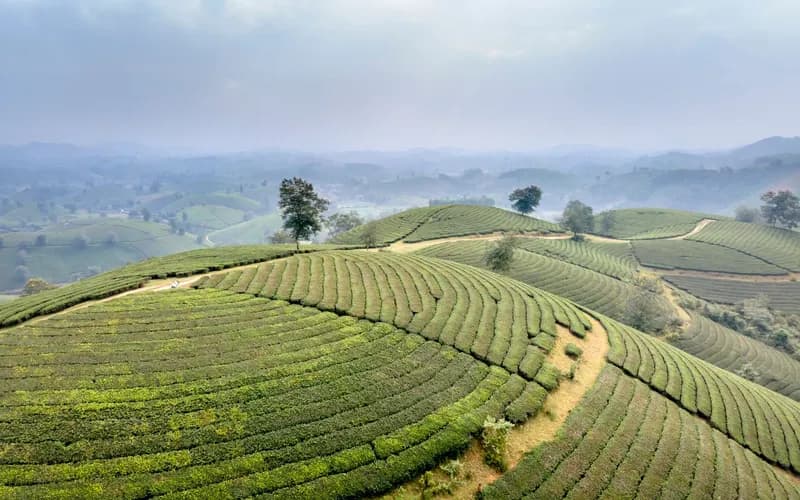
The most distinctive thing to do in Phongsaly has nothing to do with temples. Ban Komaen, a hilltop village roughly an hour from town, is home to tea trees that local growers and visiting researchers date to around four hundred years old: not bushes clipped into hedges, but gnarled trunks you can stand beneath. Phongsaly tea has a real reputation across the border in Yunnan and, increasingly, in specialty markets further afield. The villages here still process it by hand, picking, wilting, rolling and drying on bamboo racks.
You can reach Ban Komaen on a full-day walk through tea gardens and forest, which is how the provincial tourism office generally arranges it, or ride out by motorbike and spend the afternoon picking with a family and drinking whatever comes off the wok. The second option is easier; the first is better. Walking in, you pass the thing that makes Phongsaly agriculture unusual, which is tea grown under partial forest canopy, mixed with other crops, on slopes too steep for any machinery. It becomes obvious why the flavour is what it is.
A practical note: tea bought in the village costs a fraction of what the same leaf fetches in Luang Prabang, and it travels well. If you buy, buy from the household that picked it.
Get matched with up to 5 trusted Laos agencies
- Free
- No obligation
- Up to 5 agencies
Trekking to Akha Villages
Phongsaly's treks are the real reason to make the journey. The best known is the multi-day route to the Akha villages on the ridges north and east of town, including the well-established Akha Noukouy circuit, which climbs to settlements sitting at around 1,200 metres and overnights in village homes, traditionally in the house of the village head. These are not staged experiences. There is no plumbing, the sleeping arrangement is a mat on a raised floor, and you will be woken by pigs.
That honesty cuts both ways. A trek like this is genuinely interesting and genuinely intrusive, and how it is arranged determines which of those dominates. Book through the provincial tourism office or an operator that uses village guides, pays a set fee into the host household, and rotates which villages receive groups. Ask directly how much of what you pay stays in the village; a good operator answers without hesitating. We go through the questions worth asking in our guide to choosing a community homestay trek, and they apply in Phongsaly more than almost anywhere else in the country.
Practicalities: treks run from one to four days, groups are small and often just you plus a guide, and the per-person price drops sharply if you can find two or three other travellers at the tourism office. Bring a sleeping bag liner, a head torch, and more small-denomination kip than you think you need.
Muang Khua and the Broken River Road
The classic romantic route into or out of Phongsaly is by boat down the Nam Ou. It still exists, but it is no longer one journey. Dams on the Nam Ou have cut the river into sections, and the trip between Hat Sa, the landing about a kilometre east of Phongsaly town, and Muang Khua, Muang Ngoi or Nong Khiaw is now a two-day affair combining public boats with road transfers around the dam walls, usually with an overnight stop in Muang Khua.
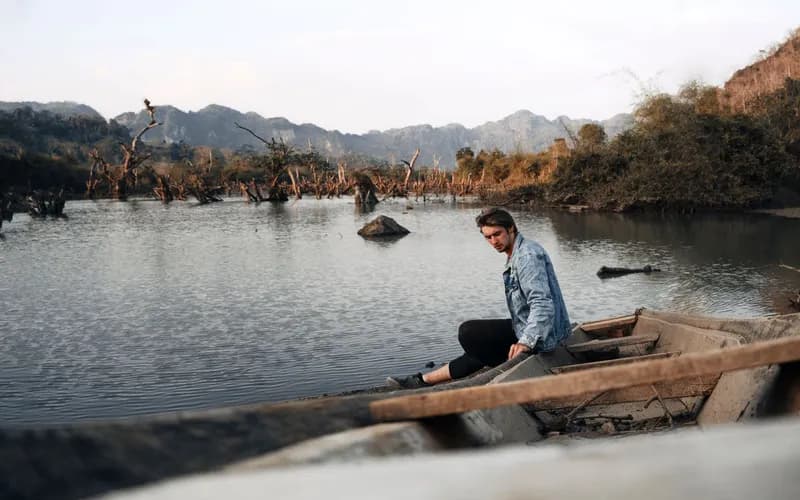
This is worth knowing before you romanticise it. The boats are long, narrow, loud and low in the water. The scenery between the dams is still extraordinary. The land transfers are cramped minivans on dirt. Done deliberately, with time in hand and no onward connection to make, it is one of the most memorable journeys in Laos. Attempted on a schedule, it will break the schedule.
Muang Khua itself, where the Nam Phak joins the Nam Ou, deserves a night rather than a transit stop. It is a small, mixed town, with Akha, Khmu and Tai Dam communities in the surrounding hills, a long footbridge, a handful of riverside guesthouses and almost nothing to do, which is the point. Further downstream the same valley opens into the stretch we cover in detail in Nong Khiaw and the Nam Ou valley, and the two pieces of river read very differently now that the dams sit between them.
Where to Stay and What It Costs
Accommodation in Phongsaly is simple and cheap. Guesthouses in town run from roughly 80,000 to 200,000 kip for a double, mostly family-run, mostly unheated, which matters in January. Hot water is common but not guaranteed, and extra blankets are usually available if you ask. Online booking coverage thins out badly this far north, so expect to arrive without a reservation, walk two or three places and choose. That is normal here and nothing to worry about, though it is worth arriving before dark.
Village homestays on trek are arranged as part of the trek rather than booked separately. If you want to understand how accommodation works across the country, where booking platforms are reliable, where they are not, and when walking in is simply better, see our practical guide to where to stay in Laos.
Cash is the whole story up here. There is an ATM in Phongsaly town, but assuming it will work is a mistake travellers make repeatedly. Bring enough kip from Oudomxay or Luang Prabang to cover your entire stay plus your exit, in small notes.
When to Go
October to early December is the sweet spot. The rains have finished, the hills are still green, the rice terraces are gold or freshly cut, and the cold has not yet settled in. January and February bring clear skies, dramatic valley fog and genuinely chilly nights, which is pleasant if you packed for it and miserable if you did not. March and April are hazy with agricultural burning across the northern uplands, which flattens the views and can irritate lungs. That is the season to skip.
The green season, roughly June to September, is the most beautiful and the least practical. Trekking trails turn to mud, leeches appear, and mountain roads can close for days after heavy rain. If you travel then, build slack into the plan and accept that the plan may change.
Eating in the Far North
Phongsaly food leans away from the lowland Lao dishes travellers learn first. Expect more Yunnanese influence: wheat noodles alongside rice noodles, fermented and pickled vegetables, mountain herbs you will not recognise, and plenty of tea served plain and hot. Breakfast in the market is a bowl of noodle soup and a glass of something green. Grilled river fish appears when the boats have run. Vegetarians manage, but need to say so clearly and early, and should be relaxed about fish sauce.
If you are travelling more widely and want a sense of where the far north fits into a longer, quieter route through the country, our guide to Laos off the beaten path sets Phongsaly alongside the other places that reward the detour.
What to Do Next
- Decide your entry and exit before anything else. Phongsaly is not a loop you pass through casually, so pick either the Oudomxay road or the Nam Ou river route in, and the other out.
- Give the province a minimum of four nights on the ground, excluding travel days. Two nights is a bus ride with a view.
- Book nothing except your first night. Then visit the provincial tourism office in Phongsaly town on your first morning to arrange treks and find trekking companions.
- Draw cash before you leave Oudomxay or Luang Prabang, in notes of 50,000 kip and below.
- Pack for altitude and cold: a warm layer, a rain shell, proper shoes, a sleeping bag liner and a torch.
- Check current bus departures at the station the day before you travel, not online.
- If you are combining Phongsaly with the river, allow two full days for the Hat Sa to Nong Khiaw journey and book no onward transport at the far end.
Frequently Asked Questions
How many days do I need in Phongsaly?
Four to five nights in the province is a realistic minimum if you want to do a two or three-day trek and still see the town, Phou Fa and a tea village. Add a travel day at each end. Travellers who give it less usually report that they spent most of their stay on buses.
Can I still take the boat from Phongsaly to Nong Khiaw?
Yes, but not in one go. Dams on the Nam Ou mean the journey is now split into boat legs with road transfers around the dam walls, typically taking two days with a night in Muang Khua. Confirm the current arrangement locally, because which legs run by boat and which by road changes.
Do I need a guide to trek from Phongsaly?
In practice, yes. Trails are unmarked, villages are not signposted, and most hosts speak Akha or Phu Noi rather than Lao, let alone English. A local guide is also what makes your visit welcome in the villages receiving you rather than merely tolerated.
Is there an ATM in Phongsaly?
There is one in town, but treat it as a bonus rather than a plan. Arrive with enough kip in small notes to cover your accommodation, food, trek and onward transport.
What is the best month to visit?
Late October to early December offers the best combination of clear weather, green hills and passable roads. January and February are colder but very clear. Avoid March and April, when burning-season haze obscures the views that are the main reason to come.
Is Phongsaly suitable for a first trip to Laos?
It can be, but only if you are comfortable with long overland journeys, minimal English and no reliable internet booking. Most travellers enjoy it more as a second or third region, after they have found their feet somewhere easier such as Luang Namtha or Nong Khiaw.
How cold does it actually get?
Nights in December and January regularly drop into single digits Celsius in Phongsaly town, and colder on the ridges where trekking homestays sit. Guesthouses are unheated. One warm layer plus a sleeping bag liner covers it.