
Chinese New Year is the one week of the year when Singapore slows down by itself. In 2027 the first day of the Year of the Goat falls on Saturday 6 February, and for about two days a large share of the city's hawker stalls, shophouse eateries and small family businesses pull down their shutters while people stay home or visit relatives. Travellers who arrive expecting the usual round-the-clock city can find those days frustrating. Travellers who plan around them often find they are the calmest days they ever spend in Singapore.
This guide starts with the practical side: the official 2027 dates, what tends to close and for how long, how transport and prices behave over the long weekend, and what we know so far about the Chinatown light-up and River Hongbao. It then looks at how to use the festive weeks at a slower pace, from early weekday evenings under the Chinatown lanterns to a near-empty Tiong Bahru on the morning of the second day.
The 2027 dates at a glance
Singapore's Ministry of Manpower published the 2027 public holiday list in June 2026. Chinese New Year takes two gazetted holidays, Saturday 6 and Sunday 7 February. Because the second day lands on a Sunday, Monday 8 February is also a public holiday, which gives residents a three-day weekend and gives many of them a reason to leave the country. The eve, Friday 5 February, is officially a working day, but plenty of offices let staff go early for the reunion dinner, and by late afternoon the city starts to empty.
- Late JanuaryChinatown street light-up and festive fair expected to open (2027 dates not yet announced)
- Fri 5 FebChinese New Year's Eve: reunion dinners, early closures, later trains likely
- Sat 6 FebDay 1, public holiday: the quietest day of the year for small businesses
- Sun 7 FebDay 2, public holiday: many closures continue while families visit each other
- Mon 8 FebPublic holiday in lieu: shops and stalls begin to reopen
- Mid to late FebMost businesses back to normal, decorations stay up for a few more weeks
Festival dates beyond the public holidays had not been published when we wrote this. In 2026, Chinatown's street light-up was switched on on 30 January, about two and a half weeks before the new year, and stayed on until 18 March, while River Hongbao ran for ten nights starting two days before the eve. Use that as a rough guide and check the organisers' pages from mid-January. Our Singapore month-by-month guide explains how February weather and the other early-year festivals fit around these dates.
One request. Up to five tailored proposals.
Skip contacting agencies one by one — share your trip once and let up to five trusted Singapore agencies come to you. Free, with no obligation.
Get my free quotesWhat closes, and for how long
Hawker centres as buildings stay open. When Old Airport Road was reported to be closing a few years ago, its operator stated publicly that none of the centres it manages are required to shut over the new year. The stalls are another matter. Many Chinese-run stalls take days 1 and 2 off, often a few days more, and the owners usually tape a handwritten notice to the shutter a week or so ahead with their own dates. Malay, Indian and Western stalls in the same centre generally keep cooking, so a centre is rarely empty, just thinner and with shorter queues at the stalls that remain.
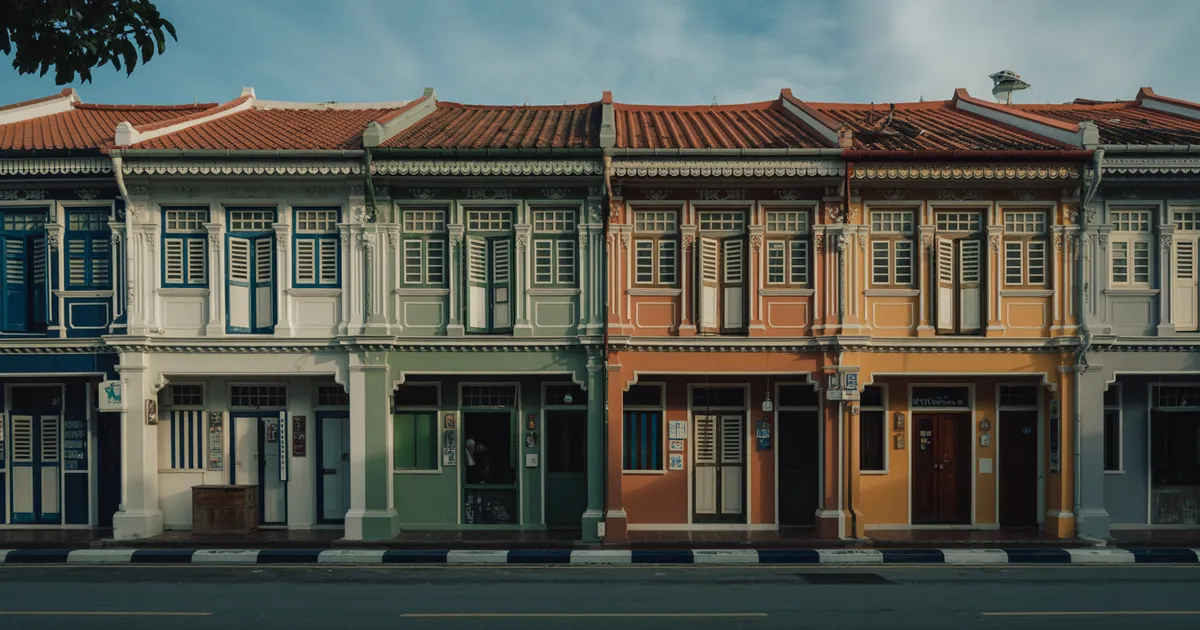
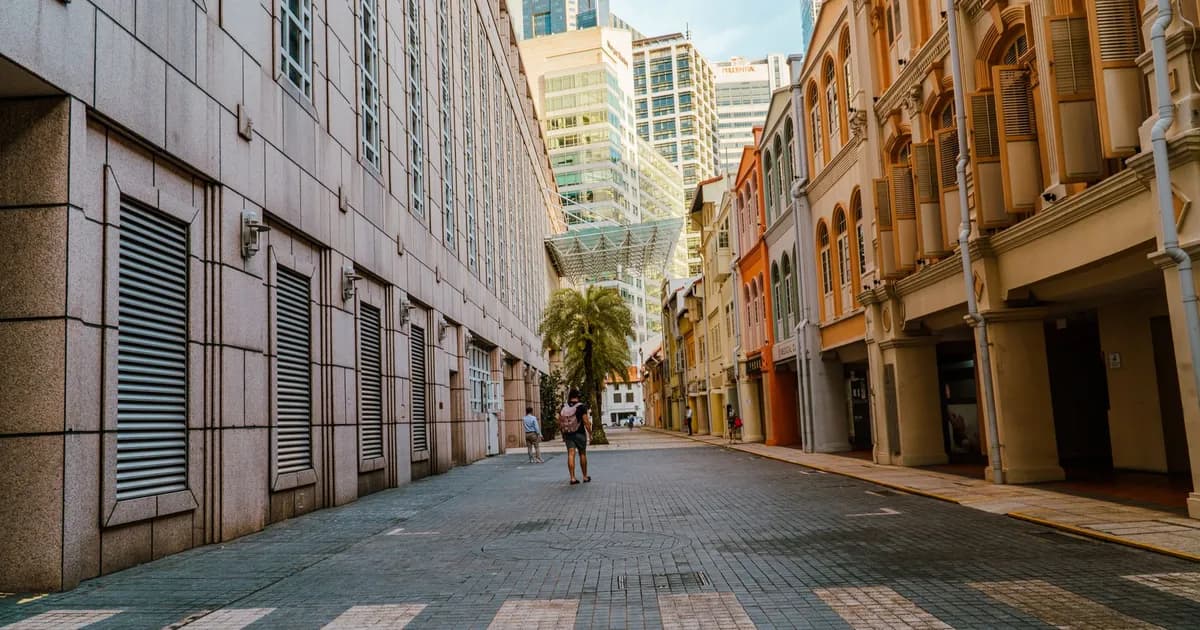
Shophouse restaurants, kopitiams and small shops in Chinatown, Tiong Bahru and the older estates follow the same rhythm. Local food and lifestyle media describe the first two days as the time when Singapore comes to a standstill, with stores shuttered and malls quiet. Large malls and chains usually reopen first, often on day 2 with shorter hours, and some restaurant groups publish lists of outlets that stay open throughout.
Two more things catch visitors out. Hawker centres close on fixed dates through the year for routine spring cleaning, and the National Environment Agency publishes that schedule, so check it if you are heading to a specific centre in February. On Pulau Ubin, NParks issues a notice each year about changed opening hours for the island's shops and bicycle rental around the new year.
Watch out
Day 1 is the day most likely to catch you out. Plan breakfast and dinner in advance, keep some snacks and water in your room, and if one particular stall is the reason for your visit, assume it is closed from the afternoon of the eve until at least day 3.
The upside is that the stalls which reopen first on day 3 or 4 are busy with regulars catching up, and that is a good moment to see how much these places mean to the people who eat there. Our piece on Singapore's hawker culture and its ageing stallholders gives the background.
What stays open
Much of Singapore that a visitor actually uses keeps running. Hotels and their restaurants operate as usual, convenience stores stay open, and fast-food and international chains in the malls tend to trade at least partly. Changi Airport and Jewel stay busy, and in 2025 some restaurants at Jewel opened on the first day. Little India and Kampong Glam, where most businesses are not Chinese-run, carry on much as normal, which makes them useful places to eat on days 1 and 2.
Big attractions such as Gardens by the Bay and the wildlife parks generally open on public-holiday hours. They can be busier than on a normal weekday because residents have time off, so go early in the morning or later in the afternoon. Museums are a calmer option for the heat of the day.
Get matched with up to 5 trusted Singapore agencies
- Free
- No obligation
- Up to 5 agencies
Prices, crowds and getting around
Public transport runs through the holiday. On the eve, operators usually extend late services so people can get home from reunion dinners and countdown events, and in 2026 the extensions were announced on 2 February for an eve on 16 February.
Chinese New Year's Eve 2026 transport (for reference)
- SMRT lines extended
- North-South, East-West, Circle, Thomson-East Coast
- Last trains
- around 2am
- Late buses
- some until about 3am
- Announced
- two weeks before the eve
Expect a similar notice from SMRT and SBS Transit in late January 2027. Taxis and ride-hailing are harder to find on the eve and on day 1 because fewer drivers work, so waits get longer and app prices can rise at peak times. Walking and the MRT are the easiest way to move around the centre.
Prices rise in two directions. Many residents fly out for the long weekend, so outbound flights from Changi around Friday 5 February are in demand, while visitors from China and the rest of the region arrive for the celebrations and fill hotels near Chinatown and Marina Bay. If you want to walk back from the light-up at night, book early. Our guide to choosing a neighbourhood base compares Chinatown with quieter options a few MRT stops away.
Chinatown in the weeks before
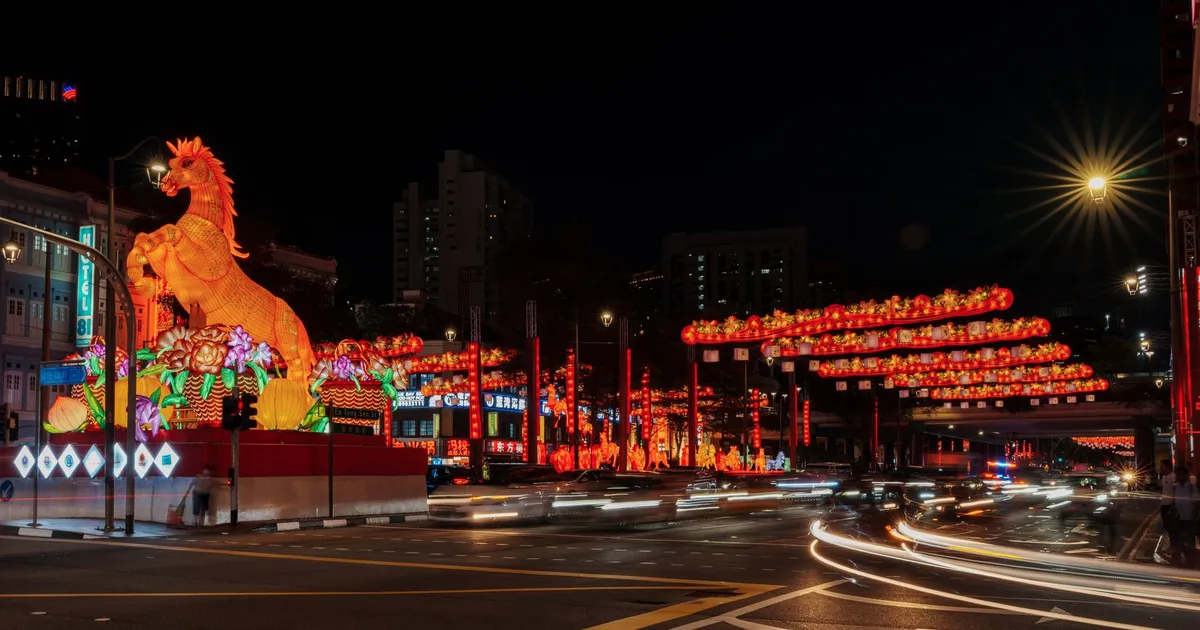
For many visitors the weeks before the new year are the best part. In 2026 the street light-up stretched along New Bridge Road, Eu Tong Sen Street, South Bridge Road and Upper Cross Street from 7pm to midnight each evening, and on the eve it stayed lit until 6am. The festive fair ran from 27 January to 17 February on Sago, Smith, Temple, Pagoda and Trengganu Streets, with stalls selling bak kwa, pineapple tarts, mandarin oranges and red decorations. It closed at 1pm on the eve, when traders packed up for their own reunion dinners.
The slow way to see it is on weekday evenings in the first two weeks, when you can stand at the junction of South Bridge Road and Upper Cross Street as the lights switch on without being pushed along. Leave the fair for a weekday afternoon, when stallholders have time to offer samples and talk. The final weekend before the eve is the most crowded time of the whole season. A countdown party at Kreta Ayer Square marked the turn of the year in 2026, and the area stays busy late into the night.
River Hongbao and the bay
River Hongbao, organised by the Singapore Federation of Chinese Clan Associations, is now held at Gardens by the Bay. In 2026 it ran from 15 to 24 February with free entry, large lantern sets, stage performances and food stalls, plus bag checks at the entrances. Fireworks went up over The Meadow at 8pm on the opening night, at midnight on the eve and at 9pm on days 1 and 2. The 2025 edition ran from 27 January to 5 February, so the festival moves with the lunar calendar. For 2027, expect it in early February once dates are announced.
The calmer time to visit is an afternoon in the days after the new year, when the grounds opened from mid-afternoon in 2026 and the lantern sets are just as bright. Inside the Flower Dome, a ticketed spring floral display ran from mid-January to the start of March in 2026. Chingay, the big multicultural street parade at the F1 Pit Building, is ticketed and its date varies: it was held on 7 and 8 February in 2025 and on 27 and 28 February in 2026. The 2027 date had not been announced at the time of writing.
Quiet days in Tiong Bahru, Katong and Pulau Ubin
Days 1 and 2 are a good time to see the parts of Singapore that are usually busy with brunch queues and tour groups. Tiong Bahru's pre-war housing estate is almost silent on the morning of the second day, and you can walk its curved staircases and courtyards with no one else around, even if half the cafés are closed. In Katong and Joo Chiat, the Peranakan shophouses are dressed for the season, and a slow walk down Koon Seng Road works as well at 9am as it does on any weekend.
For a full day outdoors, take the bumboat from Changi Point Ferry Terminal to Pulau Ubin. Check the NParks notice on shop hours before you go, bring water and cash, and be ready to walk if the bicycle rental stalls are shut. Our article on a slow day on Pulau Ubin covers the trails and what to expect on the island.
Is it a good time to visit?
Reasons to go
- Chinatown is at its most festive in the weeks before the new year
- Free events such as River Hongbao and the street light-up
- Very quiet streets and attractions early on days 1 and 2
Reasons to think twice
- Many favourite stalls and small shops close for two days or more
- Hotel and flight prices rise around the long weekend
- Chinatown is crowded on the final weekend before the eve
For a slow trip, the best balance is to arrive around Monday 1 February, spend weekday evenings in Chinatown, use the eve and days 1 and 2 for walks, parks and Pulau Ubin, and stay until Tuesday 9 or Wednesday 10 February, when the stalls are back and prices start to settle. If cost matters, our Singapore budget guide gives daily figures you can adjust for a festive week.
What to Do Next
- Block out Friday 5 to Monday 8 February 2027 in your calendar and decide whether you want the build-up, the quiet days or both.
- Book your room now, especially if you want to stay within walking distance of Chinatown or Marina Bay.
- From mid-January, check the Chinatown Festivals and River Hongbao pages for the 2027 light-up and event dates.
- In late January, look for the SMRT and SBS Transit notices on late trains for the eve.
- Plan meals for days 1 and 2 around Little India, Kampong Glam, hotels and malls, and keep a list of stalls you want to visit from day 3.
- If Singapore is one stop on a longer trip, plan your journey so the festival dates do not clash with border crossings or flights.
Frequently Asked Questions
When is Chinese New Year 2027 in Singapore?
The first day is Saturday 6 February 2027 and the second is Sunday 7 February. Both are public holidays, and Monday 8 February is a public holiday in lieu because the second day falls on a Sunday. The eve is Friday 5 February.
Are hawker centres open during Chinese New Year?
The centres stay open, but many Chinese-run stalls close on days 1 and 2 and sometimes for a few days more. Malay, Indian and Western stalls usually keep trading, so you can still eat at most centres. Stall owners normally post their own closure dates a week or so before.
Do shops and malls close at Chinese New Year in Singapore?
Small shops and family businesses often close for at least the first two days. Big malls stay open, but some tenants close and others shorten their hours, especially on day 1. Convenience stores, hotels and many chain restaurants keep running.
Does the MRT run late on Chinese New Year's Eve?
In recent years, SMRT and SBS Transit have extended train and selected bus services on the eve. In 2026 several lines ran until around 2am. The 2027 timings should be announced about two weeks before the eve.
Is Chinese New Year a good time to visit Singapore?
It is a good time if you enjoy festive atmosphere and quiet streets and can plan around two days of closures. Arrive a few days before the eve and stay until day 3 or 4 to see the celebrations and the city reopening. Book rooms early, because prices rise around the long weekend.