Buriram and Surin: Thailand's Khmer Temple Country, at Its Own Pace
Most travellers meet the Khmer empire in Cambodia, at Angkor. Far fewer realise that several of its finest surviving temples stand inside Thailand, on a plateau of rice fields and silk villages a night train from Bangkok. Buriram and Surin are not on the standard route. There is no beach here, no mountain loop, no backpacker street. What there is instead: a pink sandstone sanctuary on the rim of an extinct volcano, a moated temple ringed by lotus ponds and carved nagas, weaving villages where a single metre of brocade takes weeks, and a pace that frustrates anyone in a hurry and quietly rewards everyone else.
Where Khmer Thailand Actually Is
Between the ninth and fifteenth centuries the Khmer empire reached deep into what is now northeastern Thailand. The provinces along the southern rim of the Khorat Plateau, running east from Nakhon Ratchasima through Buriram and Surin to Sisaket, were not frontier outposts but working parts of that world, linked to Angkor by a royal road whose stone rest houses still surface in village fields. Today the region is called Isan, Thailand's largest and least-visited quarter, and the temples sit inside it almost casually: a prasat behind a school, a carved lintel propped in a monastery courtyard, a laterite gateway used as a shortcut by schoolchildren on motorbikes.
Buriram and Surin are the two provinces where this heritage is densest and easiest to travel. They are neighbours, both on the Bangkok to Ubon Ratchathani railway line, both with small airports served from Bangkok, and both still overwhelmingly domestic in their visitor mix. If you have been looking for parts of Thailand that genuinely avoid the crowds, this is one of the few that is under-visited in fact rather than merely marketed that way.
One request. Up to five tailored proposals.
Skip contacting agencies one by one — share your trip once and let up to five trusted Thailand agencies come to you. Free, with no obligation.
Get my free quotesPhanom Rung: The Temple on the Volcano
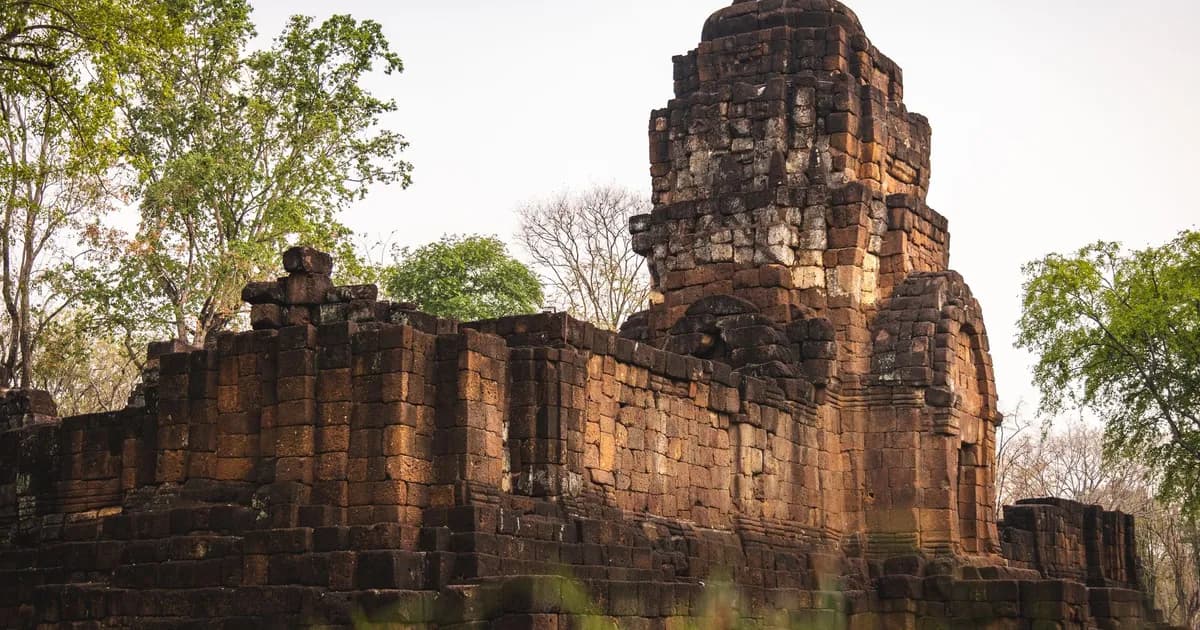
Prasat Phanom Rung is the reason most people come, and it deserves the trip. It stands on the rim of an extinct volcano about 380 metres above the surrounding plain, in Chaloem Phra Kiat district, roughly an hour by road from Buriram town. Built in stages between the tenth and thirteenth centuries, with its grandest phase under the twelfth-century king Suryavarman II, the same reign that produced Angkor Wat, it is the largest and best-restored Khmer sanctuary in Thailand.
What makes it extraordinary is not scale but sequence. You approach along a 160-metre laterite promenade flanked by sandstone posts, cross a cruciform naga bridge, climb a staircase, cross a second bridge, and only then enter the main sanctuary. The architecture is doing something deliberate: it is slowing you down, turning arrival into ascent. Walk it quickly and you will see stones. Walk it at the pace it was designed for, ideally before nine in the morning when the light is low and the coach groups have not arrived, and the whole thing works as intended.
The site is aligned so that on a handful of mornings and evenings each year the sun shines straight through all fifteen doorways. The sunrise alignments typically fall in early April and early September; the sunset alignments in early March and early October. The Phanom Rung festival is built around the April window and brings processions, Khmer-style ritual and light-and-sound performances to a site that is otherwise very quiet.
Muang Tam and the Smaller Prasats
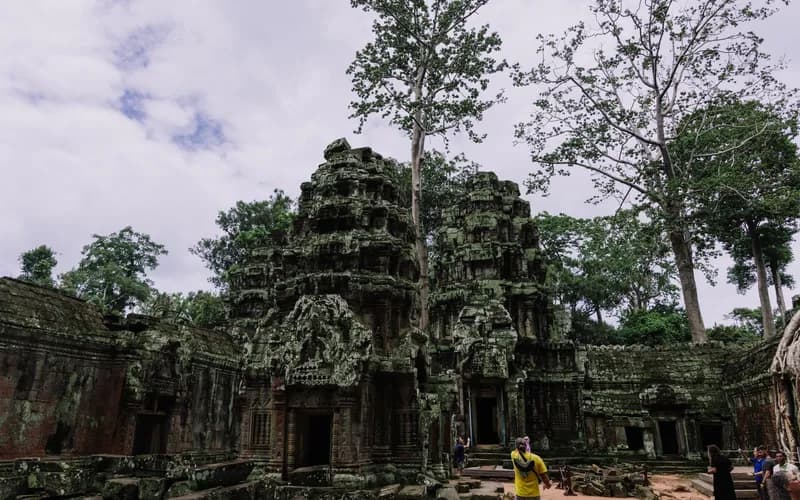
Eight kilometres downhill sits Prasat Muang Tam, and skipping it is the most common mistake visitors make. Where Phanom Rung is a mountain temple, Muang Tam is a water temple: an eleventh-century complex enclosed by laterite walls with four L-shaped ponds in its corners, their edges carved into five-headed nagas. It is smaller, lower, greener and almost always emptier. Late afternoon, with the light across the ponds and the lotus open, it is arguably the more moving of the two.
Beyond these headline sites the region is thick with smaller prasats that reward curiosity rather than planning. Prasat Sikhoraphum in Surin province, reachable by local train, has a central tower with a superbly carved lintel of Shiva dancing. Prasat Ban Phluang is a single elegant sandstone chamber in a pond-side garden. Kuti Rishi shrines, the Khmer road-side hospices, turn up in villages where nobody will charge you anything or explain anything. Entrance fees at the two main sites are modest, commonly quoted at around 100 baht per site for foreign visitors with a combined ticket for Phanom Rung and Muang Tam, though the Fine Arts Department has revised historical-park pricing in recent years, so treat any figure you read as indicative and check at the gate.
Get matched with up to 5 trusted Thailand agencies
- Free
- No obligation
- Up to 5 agencies
Surin: Silk, Rice and the Question of Elephants
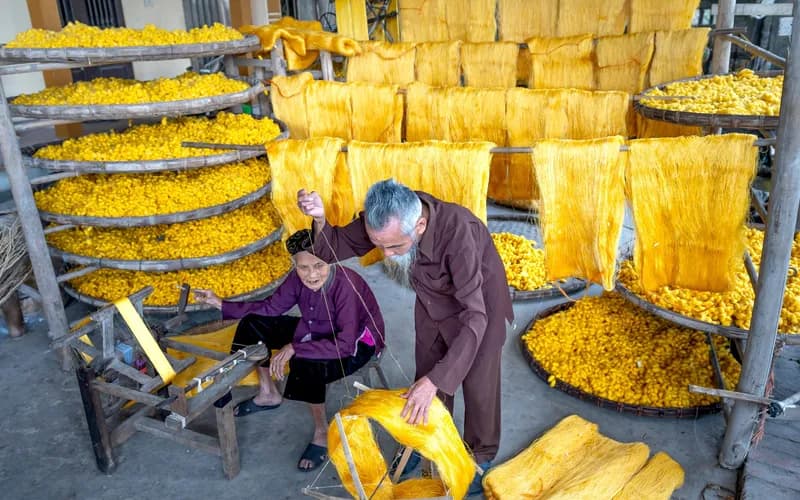
Surin, an hour and a half east of Phanom Rung, is a different proposition: not a monument province but a craft one. Ban Tha Sawang, a village just outside the town, weaves some of the most technically demanding silk in Southeast Asia. Its signature brocade is worked on looms operated by four weavers at once, and progress is measured in centimetres a day rather than metres. The village supplied the textiles worn by leaders at the APEC summit hosted by Thailand in 2003, which locals will tell you about, deservedly. Watching a loom for twenty minutes is one of the better arguments for slow travel you will find anywhere in the country.
Surin is also hom mali rice country, some of the best jasmine rice in Thailand, and a silk market town where a morning spent comparing weaves and asking about dyes costs nothing. And it is elephant country. Ban Ta Klang, the Kui elephant-keeping village north of town, has kept mahout traditions for generations and now hosts a large government-backed elephant centre. Be clear-eyed about it: some operations there still offer rides and performance, and the welfare picture varies considerably from enclosure to enclosure. Read our guidance on how to tell an ethical elephant project from a bad one before you commit a day or your money to any of it.
Getting There and Getting Around
The honest answer is that this region is built for the train and awkward without a vehicle. Both Buriram and Surin sit on the northeastern main line, with roughly a dozen services a day in each direction between Bangkok and Ubon Ratchathani. Second-class seats from Bangkok to Buriram typically run in the low hundreds of baht, third class considerably less, and a first-class sleeper berth on the overnight service costs around 1,000 baht. Arriving by sleeper at breakfast time, then walking out into a market town that has not organised itself around your arrival, is the right introduction. Our slow rail guide to Thailand covers booking windows and class choices in detail.
Once here, the temples are the problem. There is no reliable scheduled public transport to Phanom Rung. The realistic options are a hired car with driver for the day, commonly quoted between 800 and 1,200 baht return from Buriram for the Phanom Rung and Muang Tam pairing, a rented motorbike if you are experienced and comfortable on rural highways, or a songthaew relay to the nearest junction followed by a motorbike taxi. Budget a full day for the two main temples and do not try to add Surin on the same day.
Where to Stay and What It Costs
Accommodation here is domestic-market and priced accordingly. Buriram town has business hotels, a handful of design guesthouses and homestays in the villages nearer the temples; Surin has similar, plus silk-village homestays that put you in a working household. Expect competent, unglamorous rooms at a fraction of island prices, with the trade-off that English is limited and online listings are patchy. Booking two nights in Buriram and two in Surin, rather than day-tripping from Nakhon Ratchasima, is what turns this from a monument checklist into a place.
A few practical notes on staying well here:
- Village homestays near Phanom Rung mean a five-minute drive to the gate for sunrise rather than an hour.
- Buriram fills completely during motorsport weekends at the Chang International Circuit and big football fixtures at the stadium. Check the calendar before you fix dates.
- Cash matters more than in Bangkok. ATMs are fine in both towns and scarce between them.
Eating in Khmer Country
Isan food needs no defence, but the southern rim has its own accent, shaped by Khmer and Kui as much as Lao. Expect grilled chicken and sticky rice done seriously, som tam in more variations than any menu admits, fermented-fish depth where central Thai cooking would use sugar, and kanom chin noodles eaten at breakfast from a plastic stool. The morning markets in both towns open early and close by mid-morning, which is when the interesting eating happens. Anyone travelling on their appetite should read the regional cuisine chapters of our Thai food guide before arriving, because ordering well in Isan is mostly a matter of knowing what to ask for.
When to Go
November to February is the obvious window: dry, clear, cool enough at dawn on the volcano rim to want a layer. March to May is punishing on the plateau, with temperatures that make a treeless laterite promenade a genuine ordeal by ten in the morning, though the early-April alignment and festival fall inside it. The green season from roughly June to October turns the rice terraces around the temples an improbable green and brings brief, heavy afternoon rain rather than all-day grey; it is the photographer's season and the cheapest one.
This is also natural pairing country. Buriram and Surin sit on the same rail line as Ubon Ratchathani, where the Mun meets the Mekong, and a two-week Isan itinerary that strings together temple country, the Mekong and a slow return through Nakhon Ratchasima is one of the most underrated routes in the country.
Honest Caveats
Three things you should weigh before committing. First, this is not an easy-access destination: without a car or a hired driver, the temples are logistically fiddly, and that is the single biggest reason visitors leave disappointed. Second, interpretation is thin. Signage at Phanom Rung is decent, elsewhere minimal, and hiring a guide in Buriram or reading up beforehand makes an enormous difference to what you actually see in a carved lintel.
Third, and most important in 2026: the Thai-Cambodian border area south of Surin has been the site of serious tension and closures, and the border-adjacent Khmer temples in that zone, including Ta Muen Thom and Ta Krabey, have been off-limits to visitors. Do not treat them as an itinerary item, and read our update on the state of the Thailand-Cambodia land border before planning any routing in that direction. The main sites covered here, Phanom Rung, Muang Tam, Sikhoraphum and the silk villages, are well inside the interior and unaffected, but the situation is worth checking close to departure.
What to Do Next
- Decide your base first: Buriram for Phanom Rung and Muang Tam, Surin for silk and the smaller prasats, or two nights in each if you have four days.
- Book an overnight train from Bangkok about two to four weeks ahead if you want a first-class sleeper berth; second-class seats are usually available much later.
- Arrange a car with driver for your temple day through your guesthouse rather than on arrival, and agree the price and the two-temple itinerary in advance.
- Check the motorsport and football calendar for Buriram before fixing dates, and the alignment dates if you care about the sunrise.
- Plan Phanom Rung for opening time, Muang Tam for late afternoon, and leave the middle of the day for lunch and shade rather than fighting the heat.
- Build in one unstructured morning in a market or a weaving village. It is usually the part people remember.
Frequently Asked Questions
How many days do Buriram and Surin need?
Four nights is the sweet spot: two in Buriram for Phanom Rung and Muang Tam, two in Surin for the silk villages and Prasat Sikhoraphum. Three works if you are efficient. A single day trip from Nakhon Ratchasima will get you the main temple and nothing else, which misses the point of the region entirely.
Can I reach Phanom Rung without renting a car?
Not conveniently. There is no dependable scheduled service to the temple. Most visitors without a vehicle hire a car and driver for the day from Buriram, typically in the 800 to 1,200 baht range for the Phanom Rung and Muang Tam pairing. A songthaew to the junction at Ban Ta Pek followed by a motorbike taxi up the hill is possible and cheap, but you are then dependent on finding a ride back.
Is the sunrise alignment worth planning a trip around?
If you are already flexible, yes, it is a genuinely remarkable piece of architectural astronomy and the festival atmosphere around the April window is memorable. If it means travelling in the hottest weeks of the year for a phenomenon that cloud can cancel, no. The temple is superb on an ordinary morning at eight o'clock with nobody there.
Is it safe to travel in Buriram and Surin given the border situation?
The interior of both provinces, where all the sites in this article are, has been unaffected and travels normally. The tension has been concentrated along the frontier itself, and the border-adjacent temples have been closed to visitors. Stay out of that strip, check current advice close to departure, and route any onward travel accordingly.
How much English is spoken?
Less than in Bangkok or Chiang Mai, and that is part of the appeal. Hotel staff in both towns generally manage; drivers, market vendors and village hosts often do not. A translation app, written place names in Thai and patience cover almost everything. Hiring an English-speaking guide for the temple day is money well spent if you want the iconography explained.
What should I not skip?
Muang Tam. It is the site most often sacrificed to a tight schedule and the one that most consistently surprises people. After that, twenty minutes watching a brocade loom at Ban Tha Sawang, which will change how you look at the price tag on any piece of Thai silk.