

Most packing advice for Vietnam fails for the same reason: it treats the country as one climate. Vietnam is more than 1,600 kilometres long. In the same week of January, Sa Pa can be near freezing with wind, Hanoi grey and damp at 16 degrees, Hoi An mild and drizzling, and Ho Chi Minh City a flat 32 degrees with no rain in sight. A packing list built for "Southeast Asia" will leave you cold in the north and overdressed in the south.
The slow-travel answer is not to pack for every scenario. It is to pack a small, layered, quick-drying kit, accept that you will be washing things constantly, and use the fact that Vietnam is one of the easiest and cheapest countries in the world to buy clothes in. What follows is the working version of that, written for trips of two weeks and up.
Start With the Map, Not the Suitcase
Before anything goes in a bag, decide which of Vietnam's three climate zones your route actually touches and in which month. The north has a genuine cool season from roughly November to March, with the mountains around Sa Pa, Ha Giang and Cao Bang materially colder than Hanoi. The centre is hot and mostly dry from January to about July, then turns seriously wet in October and November, which is also typhoon season on that coast. The south has one hot season and one hot-and-wet season, with the rains running roughly May to November and peaking in July and August.
Two-thirds of packing errors come from ignoring this. If your route is Ho Chi Minh City, the Mekong and Phu Quoc in March, you need no warm clothing at all. If it is Hanoi, Sa Pa and Ha Giang in December, you need a proper insulating layer. Work out your route's actual exposure using our month-by-month regional weather guide for Vietnam, then pack for that and nothing else.
One request. Up to five tailored proposals.
Skip contacting agencies one by one — share your trip once and let up to five trusted Vietnam agencies come to you. Free, with no obligation.
Get my free quotesThe Case for One Bag
Vietnam punishes large luggage in ways that are not obvious from home. Domestic budget flights price checked bags aggressively. Sleeper trains and buses have limited, awkward luggage space. Homestays in the north and the highlands frequently involve stairs, unpaved lanes or a short walk from where a vehicle can stop. Ferries to islands involve carrying your own bag over a gangway.
For most itineraries, a 40 to 45 litre backpack or a small wheeled carry-on plus a daypack is the right size. That constraint is not asceticism; it is what makes spontaneous route changes possible. The traveller with one bag can decide at breakfast to stay another two nights or take a local bus to somewhere unplanned. The traveller with two large cases cannot, and will quietly optimise their trip around luggage logistics without noticing they are doing it.
Clothing: The Core Kit
For a two-week-plus trip in the hot parts of Vietnam, this is a sufficient clothing list for one adult:
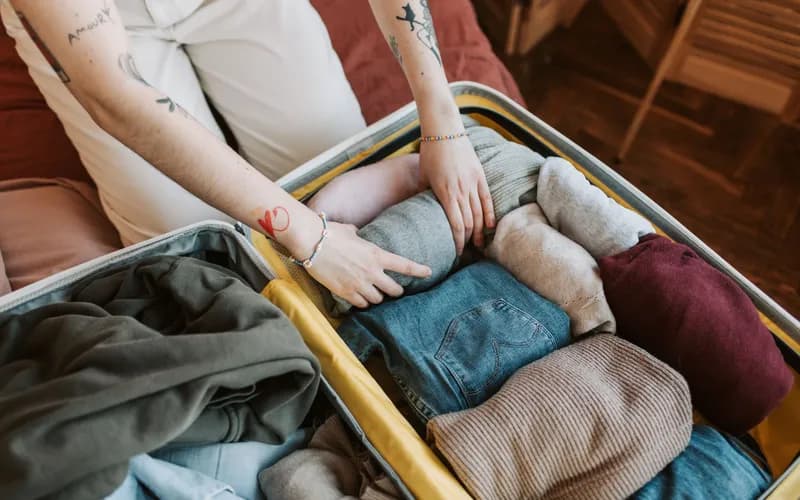
- Four to five lightweight tops, at least two with sleeves that reach the elbow
- Two pairs of light trousers, ideally one that dries fast
- One pair of shorts or a knee-length skirt
- One long-sleeved overshirt for sun, air conditioning and temple visits
- Underwear and socks for five to seven days
- Swimwear
- A very light rain shell or a folding umbrella
Fabric matters more than quantity. Linen and light cotton breathe well but dry slowly in humidity; technical synthetics and merino dry fast but hold odour differently. A mixed kit works best: cotton or linen for daytime comfort, one or two quick-dry pieces for travel days and for the wet season. Avoid heavy denim entirely — it is miserable in humidity and takes two days to dry.
Laundry is the reason the list can be this short. Wash-and-fold services are widespread and inexpensive, typically charged by the kilo, and most guesthouses either offer it or will point you to the shop on the corner. Budget a day's turnaround and plan a laundry stop every four or five days rather than packing your way around the problem.
Get matched with up to 5 trusted Vietnam agencies
- Free
- No obligation
- Up to 5 agencies
Dressing for Temples, Homestays and Villages
Vietnam is relaxed about clothing in cities and much less so at religious sites and in rural communities. Pagodas, temples and shrines generally expect covered shoulders and knees for everyone. Some major sites lend wraps; many do not. Carrying one long-sleeved layer and either light trousers or a scarf solves this permanently and weighs almost nothing.
The same restraint applies in ethnic minority villages in the north and the highlands, where standards of dress are more conservative than in Hanoi and where visitors are unusually visible. Our guide to etiquette in temples, homestays and village visits goes further into the behaviour side, but the packing implication is simple: at least one outfit that covers you properly, kept clean and accessible rather than at the bottom of the bag.
Homestays add a second consideration. Sleeping arrangements are often communal and thin-walled, bathrooms shared, and modest sleepwear is genuinely useful — a light T-shirt and shorts rather than anything minimal. Our homestay guide covers what to expect in more detail.
Rain, Heat and the Wet-Foot Problem
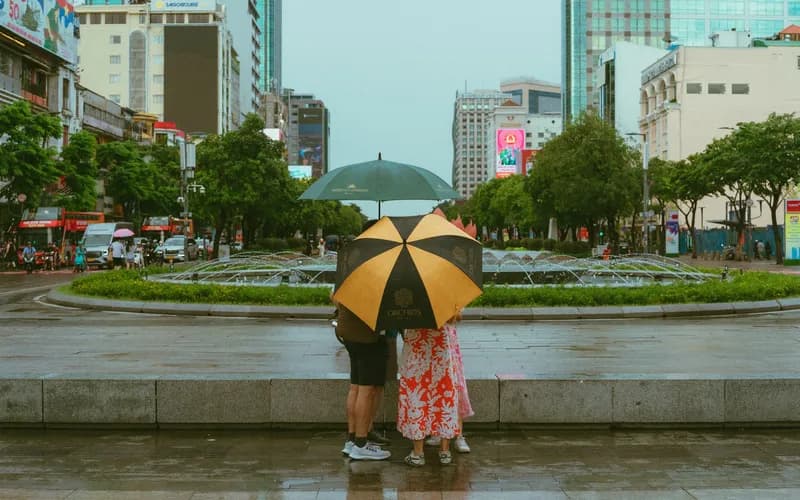
Rain in Vietnam is not drizzle. In the wet season it arrives hard, usually in the afternoon, often for under an hour, and then stops. This changes what you should carry. A heavy waterproof jacket is the wrong tool: it is too hot to wear in 30-degree humidity, and you will sweat as much as you would have got wet. The right kit is a very light shell or a folding umbrella, plus the acceptance that you will occasionally be soaked and dry off in twenty minutes.
The genuinely difficult problem is feet. In flood season in the Mekong Delta, in the terraced north during harvest rains, and on any village walk after a storm, you will be walking on wet ground in wet footwear. Two pairs of shoes solve this: one you do not mind soaking, one kept dry. Add a couple of dry bags or heavy ziplocks for electronics and documents, which cost almost nothing and prevent the one failure that actually ruins a trip.
If your route includes the flooded landscapes described in our piece on An Giang and Vietnam's Mekong borderlands, assume wet feet as the default rather than the exception between August and November.
The North in Winter Is the Exception
Between roughly December and February, northern Vietnam needs real cold-weather clothing, and this is where visitors are most often caught out. Hanoi sits around 15 to 20 degrees but feels colder because buildings are unheated and the damp is persistent. Sa Pa, Ha Giang, Cao Bang and Mu Cang Chai can drop into single digits, occasionally to freezing, with fog and wind.
For those months and those places, add a packable down or synthetic insulated jacket, a fleece or midlayer, a warm hat, and one pair of proper socks. That is roughly 800 grams of extra kit that transforms the trip. Skip it and you will spend an evening in a Sa Pa market buying a fleece you did not want, which is a perfectly acceptable fallback but a more expensive one than planning.
If you are still deciding when to travel, our region-by-region climate guide is a better starting point than a single national average.
Footwear
Three options cover almost everything: a pair of light trainers or trail shoes for walking and city days, sandals with a proper sole for heat and wet streets, and flip-flops for showers and homestays. Boots are unnecessary for all but serious multi-day trekking, and if you are doing that, most northern trekking operators can advise on gaiters and leech socks for the wet months.
Do not bring new shoes. Vietnamese cities involve far more walking on uneven pavement than most travellers anticipate, and blisters in the first week shape the whole trip.
Electronics, Power and Connectivity
Vietnam runs on 220V at 50Hz, and sockets in most modern buildings accept both flat two-pin and round two-pin plugs, so many European and American travellers need no adapter at all. UK travellers do. A small multi-socket adapter with USB ports is the sensible universal answer, particularly in older guesthouses where there may be one usable outlet.
A power bank is genuinely useful on long bus and train days. Bring it in your carry-on, never in checked luggage. eSIM coverage is good and data is cheap; the practicalities of connectivity, cards and cash are covered in our money, cards and connectivity guide.
If you plan to ride, bring your own helmet only if you are particular about fit; rental helmets are widely available but often poor quality, and the safety trade-offs are discussed in our guide to renting and riding a motorbike in Vietnam.
Health, Skin and the Small Bag That Matters
Pharmacies in Vietnamese towns are excellent, cheap and well stocked, so a small kit is enough: rehydration salts, an anti-diarrhoeal, paracetamol, plasters, any personal prescription medication in its original packaging, and a copy of the prescription.
Two things are worth bringing from home. First, high-SPF sunscreen you like using: it is available in Vietnam but often expensive, and many local products include skin-whitening agents. Second, insect repellent with a concentration you trust, particularly for the delta, the highlands and evening river areas.
Add a reusable water bottle. Tap water is not drinkable, but filtered refill stations are increasingly common in hotels and cafés, and Vietnam's tightening rules on single-use plastic in national parks and heritage sites make refilling the practical as well as the responsible option.
What Not to Bring, and What to Buy There
Leave behind: heavy jeans, more than one formal outfit, a full-size towel if your accommodation provides them, bulky toiletries, a hairdryer, and any book you can read on a phone. Vietnam's clothing markets and tailors are the best argument for underpacking. A shirt made to measure in Hoi An costs a fraction of European prices, and everyday clothes in any city market cost very little. If you are budgeting the trip, our Vietnam trip cost guide puts these numbers in context.
The one thing worth arriving with is space. If you are travelling for a month, leaving room for what you will inevitably buy is more useful than packing a fifth shirt.
What to Do Next
- Map your route against the three climate zones and the month you are travelling, and write down the coldest and wettest conditions you will actually face.
- Choose one bag under 45 litres and commit to it before you start laying things out.
- Lay out everything you think you need, then remove a third of the clothing. Almost nobody regrets this.
- Add one covered outfit for temples and villages, and keep it near the top of the bag.
- Add a folding umbrella or light shell, two dry bags, and a second pair of shoes you are willing to soak.
- Add insulation only if your route touches the northern mountains between November and March.
- Book a route that gives you laundry days rather than one that outruns them — our plan your journey page is the place to start if you want the pace designed rather than improvised.
Frequently Asked Questions
How much clothing do I actually need for two weeks in Vietnam?
Around five days' worth. Laundry is cheap, fast and available almost everywhere, usually charged by the kilo. Packing fourteen days of clothing means carrying weight through airports, sleeper trains and homestay stairs for no benefit.
Do I need a rain jacket in the wet season?
A very light shell or a folding umbrella is enough. Heavy waterproofs are counterproductive in 30-degree humidity. Rain typically arrives in short, intense bursts rather than lasting all day, and drying off is faster than staying sealed in a jacket.
Do I need a power adapter for Vietnam?
Often not. Vietnam uses 220V and most sockets accept flat two-pin and round two-pin plugs, so European and North American two-pin chargers usually fit directly. UK three-pin plugs need an adapter. A small multi-socket with USB ports is useful regardless.
What should I wear to temples and pagodas?
Cover shoulders and knees. A long-sleeved overshirt plus light trousers or a long skirt works for everyone and takes up almost no space. Some large sites lend cover-ups, but do not count on it, and remove shoes where indicated.
Is it cold in Vietnam in winter?
In the north, yes. Hanoi is damp and cool from December to February, and the mountains around Sa Pa, Ha Giang and Cao Bang can approach freezing. Central and southern Vietnam stay warm. Pack insulation only for the northern part of a winter route.
Can I buy what I forget once I arrive?
Almost certainly. Clothing, toiletries, umbrellas, basic electronics and pharmacy items are widely available and inexpensive in any Vietnamese city. The exceptions worth bringing are prescription medication, sunscreen you trust, and larger Western shoe and clothing sizes, which can be hard to find.
What is the single most overlooked item?
A dry bag, or two. Between afternoon downpours, boat trips, flood-season walks and motorbike rides, a waterproof pouch for a phone, passport and cash prevents the one kind of failure that is genuinely difficult to recover from on the road.